Getting Started
Pole Dancing for Beginners: The Complete UK Guide to Getting Started
Everything a UK beginner needs to start pole dancing: what a first class is really like, what to wear, what it costs, and how to find a studio near you.
Pole Club Team7 min read
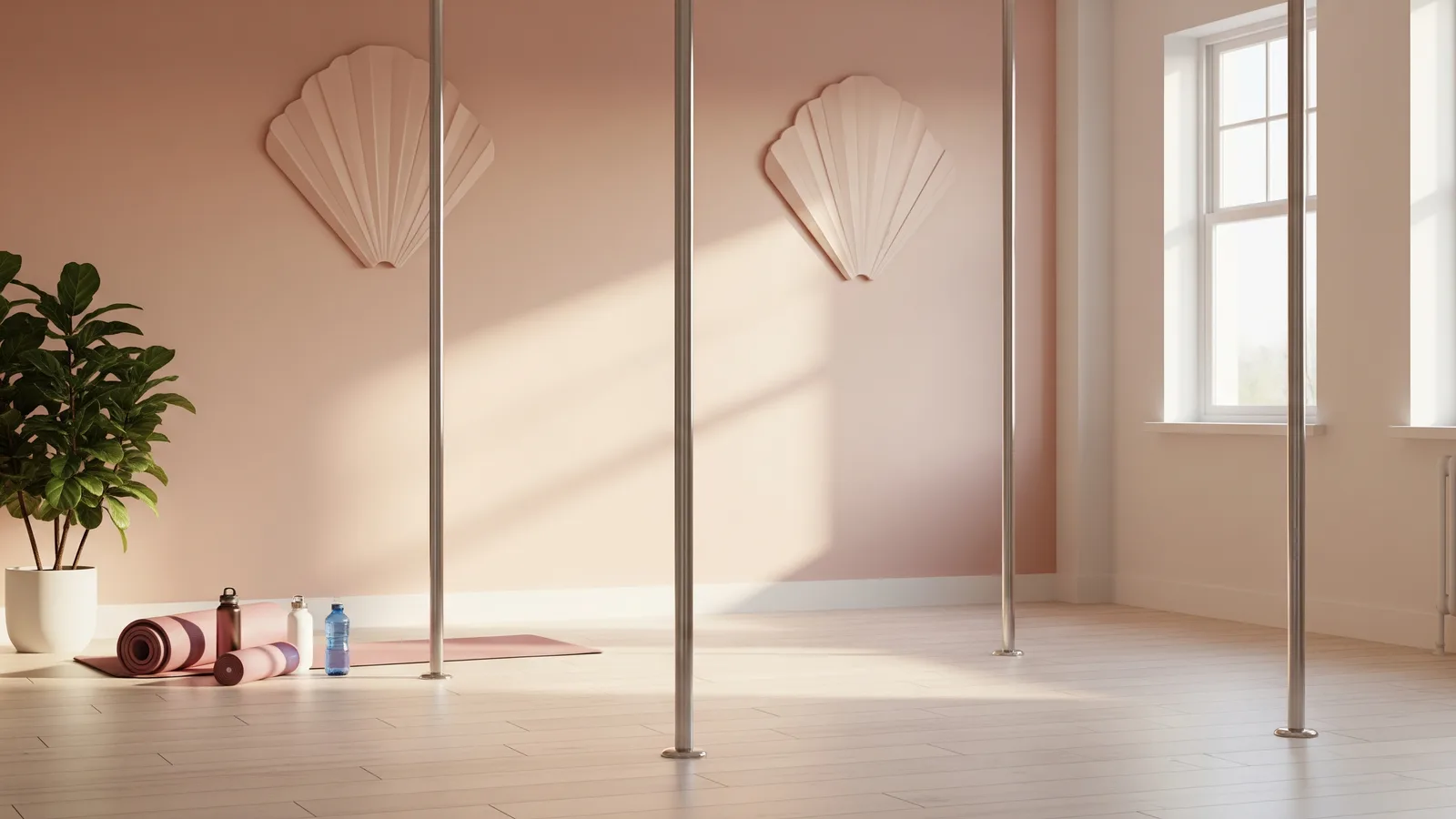
You can start pole dancing with no strength, no flexibility and no dance background — beginner classes are built for exactly that. Most UK studios run a dedicated beginner course where you learn to spin, sit and move on the pole one step at a time, on a chrome pole about the height of the room. This guide walks you through what your first class is really like, what to wear, what it costs, and how to find a studio worth your money.
Pole has grown up a lot. What used to sit at the edges of fitness is now a mainstream class you'll find in most UK towns, taught by qualified instructors in bright, mirrored studios. The people in a typical beginner class are teachers, nurses, students, retirees and everyone in between — turning up in shorts and a t-shirt to get strong and have fun.
What actually happens in a beginner pole class?
A beginner class usually opens with a warm-up, moves onto two or three spins or poses on the pole, and finishes with a stretch. You'll share a pole with one or two others, taking turns while the instructor spots you and gives feedback. Nobody expects you to string moves together on day one — the first term is about getting comfortable holding your own weight and trusting the pole.
Most first classes teach a walk around the pole, a basic spin like the fireman, and a pole sit or a simple hold. It feels awkward at first, and that's normal — gripping a metal pole is a new skill for your hands as much as your muscles. By the end of the session most people have managed at least one spin they're quietly proud of.
If you'd like a fuller play-by-play, we've written an honest, minute-by-minute walkthrough of what actually happens in your first pole class. It covers the bits nobody warns you about, like sweaty hands and the good kind of nerves.
Do you need to be strong or flexible to start pole dancing?
No. You do not need to be strong or flexible to start pole dancing — beginner classes assume you have neither and build both over time. Your first moves rely on technique and body position far more than raw strength, and instructors scale everything to where you are on the day.
Strength comes surprisingly fast because pole is progressive by design: the spins you learn in month one prepare your grip and shoulders for the climbs and holds in month three. Flexibility improves the same way, through the warm-ups and stretches built into every class. If you want to give it a nudge between sessions, our twelve-week strength progression for new polers builds exactly the right muscles at home, no fancy kit required.
What should you wear to your first pole class?
Wear shorts and a t-shirt or vest to your first pole class — you need bare skin on your legs and arms to grip the pole. Leggings and long sleeves slide, so most people bring shorts even if they'd rather cover up at first; you can always start with longer shorts and go shorter as you get comfortable.
Skip the moisturiser, fake tan, body oil and heavy perfume on class day. They all leave a film on your skin and the pole, and grip is the first thing to go. Come with clean, dry skin, tie long hair back, and take off rings and bracelets so nothing scratches the pole or catches. Our what to wear to pole class guide covers the details, including why that morning body lotion is your grip's worst enemy.
How much do pole dancing classes cost in the UK?
Most UK beginner pole classes cost roughly £10–£25 for a single drop-in, with block bookings of six to eight weeks usually working out cheaper per class. City-centre studios in London and other big cities sit at the higher end; smaller-town studios and off-peak slots tend to be kinder on your wallet.
Many studios also run a discounted taster or first-timer session, which is the lowest-risk way to try pole before committing to a block. Prices move around, so treat these as ballpark figures and check a studio's current rates when you book — you'll find live pricing on every studio's page in our UK studio directory.
Static or spinning pole — which will beginners learn first?
Beginners usually start on static pole, where the pole is locked and doesn't rotate. Static lets you focus on grip and technique without also managing momentum, so it's the gentler place to build your foundations. Many studios have poles that switch between static and spinning modes and introduce spinning pole a few weeks in, once you've found your feet.
Spinning pole, where the pole rotates freely, feels magical but can bring on dizziness at first — that settles as your body adjusts. There's no wrong order to learn them; most polers end up training both. If your nearest studio only offers one to start, that's completely fine for a beginner.
What will you actually learn in your first few weeks?
In your first month of pole you'll typically learn a handful of spins, a pole sit, how to climb, and how to link two or three moves into a short sequence. Progress is not a straight line — some weeks a move clicks instantly, others you'll wrestle with something that looked easy last time. That's the normal rhythm of learning pole.
If you like to know what's coming, our moves dictionary breaks down individual moves by level with clear technique notes, and the Pole Club Foundation Course is a structured way to build the strength and body awareness that make those early weeks smoother. Neither replaces a class, but both help the studio sessions land faster.
“The beginners who improve fastest aren't the strongest — they're the ones who turn up regularly and stop apologising for being new.”
Is pole dancing safe for beginners?
Pole dancing is safe for beginners when you learn with a qualified instructor who scales moves to your level and keeps you off anything you're not ready for. Like any strength sport, the most common niggles are sore shoulders, wrists and the odd bruise — usually from overtraining rather than accidents, and largely avoidable with warm-ups, rest days and sensible progression.
A good studio won't rush you upside down before your body is ready, and won't leave you unsupervised on a new move. Grippy bruises on your inner thighs and arms, affectionately called pole kisses, are a rite of passage rather than a warning sign; they fade as your skin adapts.
What are the main styles of pole dancing?
Pole broadly splits into pole fitness, which emphasises strength, tricks and conditioning; exotic pole, which is danced in heels with a floorwork and flow focus; and pole sport, the competitive, gymnastics-adjacent version with judged routines. Most beginner classes start you in a fitness or general beginner stream, and you can branch into heels or a particular style later once the basics feel steady.
You don't need to pick a lane before your first class, and plenty of polers happily mix all three for years. If a studio near you offers a heels class and it appeals, there's no rule that says you must earn it first — but learning to grip and spin barefoot on a static pole gives you a foundation that makes every style easier down the line.
The shared vocabulary trips up newcomers, so it's worth learning a few words early: a static pole stays still, a spinning pole rotates, an invert means going upside down, and a pole sit is exactly what it sounds like. Our moves dictionary names and demonstrates the rest as you meet them.
How do you choose a good beginner studio?
Choose a studio that runs a genuine beginner course, has qualified insured instructors, and keeps beginner class sizes small enough for real feedback. Trial the vibe first — a taster session tells you more about whether you'll feel comfortable than any website can. Location matters too, because the best studio is the one close enough that you'll actually keep going.
You can browse studios by town on Pole Club and see class types, levels and prices side by side. Popular starting points are pole classes in London, Manchester and Birmingham, but every listed UK town has its own page. Read a couple of recent reviews, then book the taster.
How often should you go as a beginner?
One class a week is plenty to start, and it's what most beginner courses are built around. Pole asks a lot of your grip and skin, and the rest between sessions is when your strength actually builds. Adding a second weekly class once you've settled in speeds things up, but more isn't automatically better in the early months.
If you catch the bug and want to train between classes, gentle conditioning and stretching at home does more for your progress than trying to force new moves alone. Consistency over months, not intensity over weeks, is what turns a nervous beginner into a confident poler.
Common questions
- Can I start pole dancing if I'm a complete beginner with no fitness background?
- Yes. Beginner classes are designed for people with no fitness, dance or gymnastics background. You'll build the strength and flexibility you need through the classes themselves, starting with simple spins and holds that rely on technique rather than power.
- What do I need to bring to my first pole class?
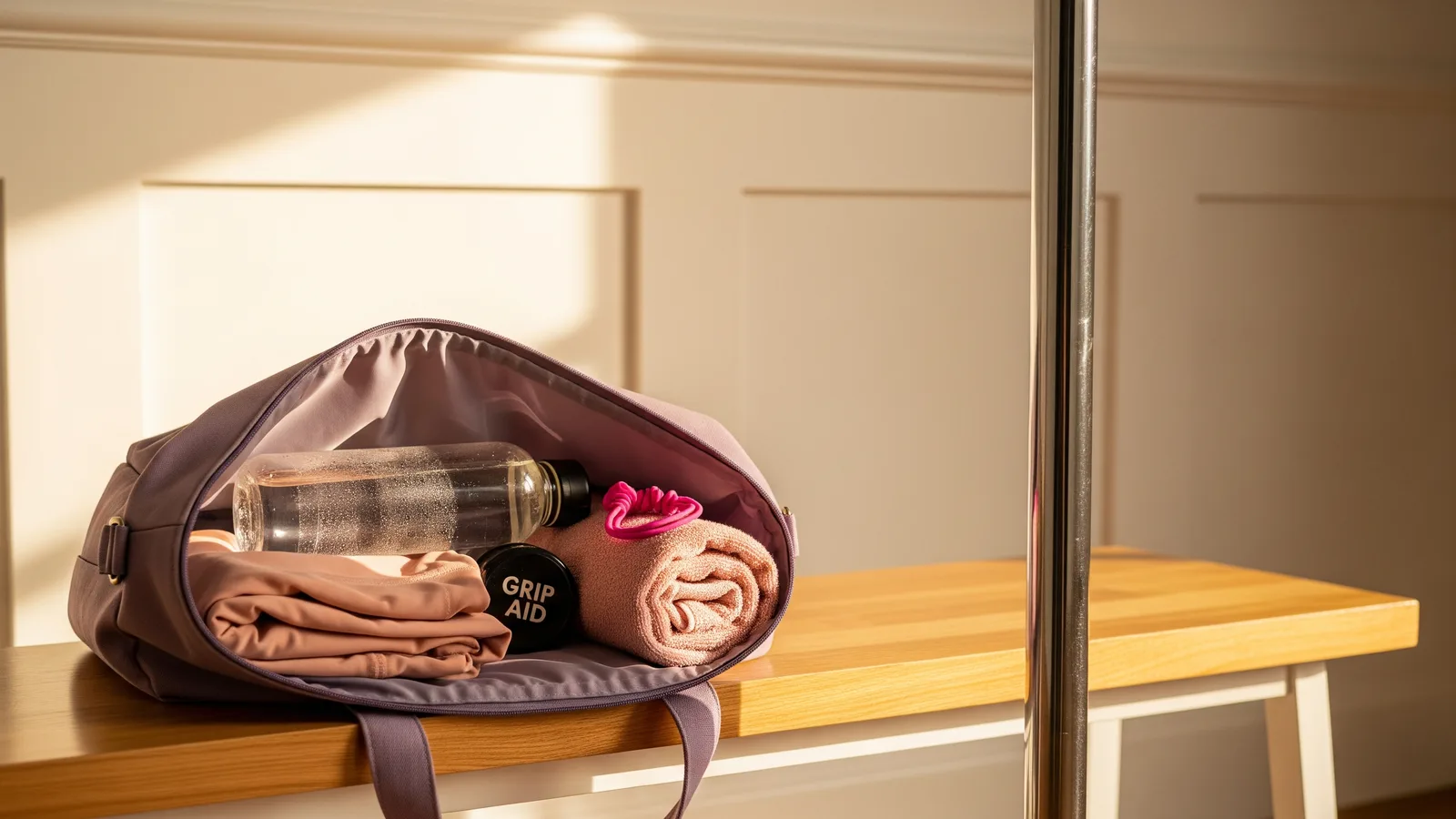
- Bring shorts, a t-shirt or vest, a water bottle and clean, moisturiser-free skin. Most studios provide the poles and any grip aids you might need. Leave rings, bracelets and body lotion at home, as they interfere with grip and can scratch the pole.
- How long does it take to get good at pole dancing?
- Most beginners manage their first spins within a class or two and can link a few moves within a couple of months of weekly training. Building real strength and inverting confidently usually takes several months to a year, depending on how often you train.
- Is pole dancing a good workout for beginners?
- Yes. Even beginner pole classes build grip, core and upper-body strength while raising your heart rate, and most people find it far more engaging than a standard gym session. It doubles as a confidence boost, which is a big part of why people stick with it.
- Do I need my own pole to start pole dancing?
- No. Studios provide poles for classes, so you don't need to buy anything to begin. If you later want to practise at home, choose a reputable pole and learn to install it safely — but that's a decision for down the line, not before your first class.
Keep reading
See all posts →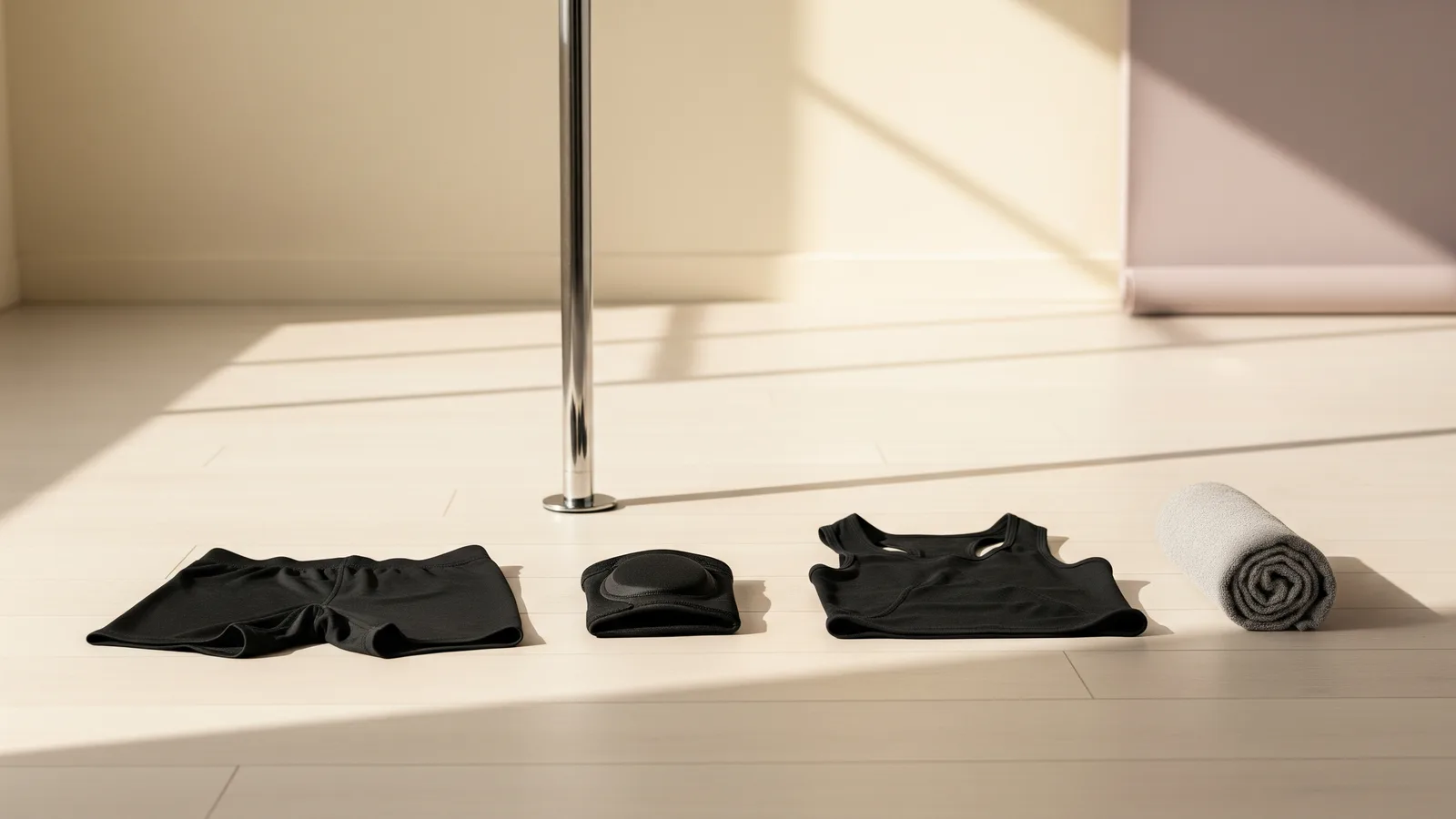
Getting Started
What to Wear to Pole Dancing Class (And What to Leave at Home)
The grip-first guide to what to wear to pole class: why shorts beat leggings, what to leave at home, coverage for the self-conscious, and seasonal notes.
Getting Started
What to Expect at Your First Pole Dancing Class: An Honest Walkthrough
A minute-by-minute logistics guide to your first pole class — arriving, waivers, warm-up, sharing a pole, the moves you'll try, and what to do after.
Getting Started
Can You Teach Yourself Pole Dancing? What Self-Taught Polers Say
Can you teach yourself pole dancing? You can learn the basics at home — but a qualified instructor prevents bad habits and injuries, especially before you invert.