Getting Started
What to Expect at Your First Pole Dancing Class: An Honest Walkthrough
A minute-by-minute logistics guide to your first pole class — arriving, waivers, warm-up, sharing a pole, the moves you'll try, and what to do after.
Pole Club Team5 min read
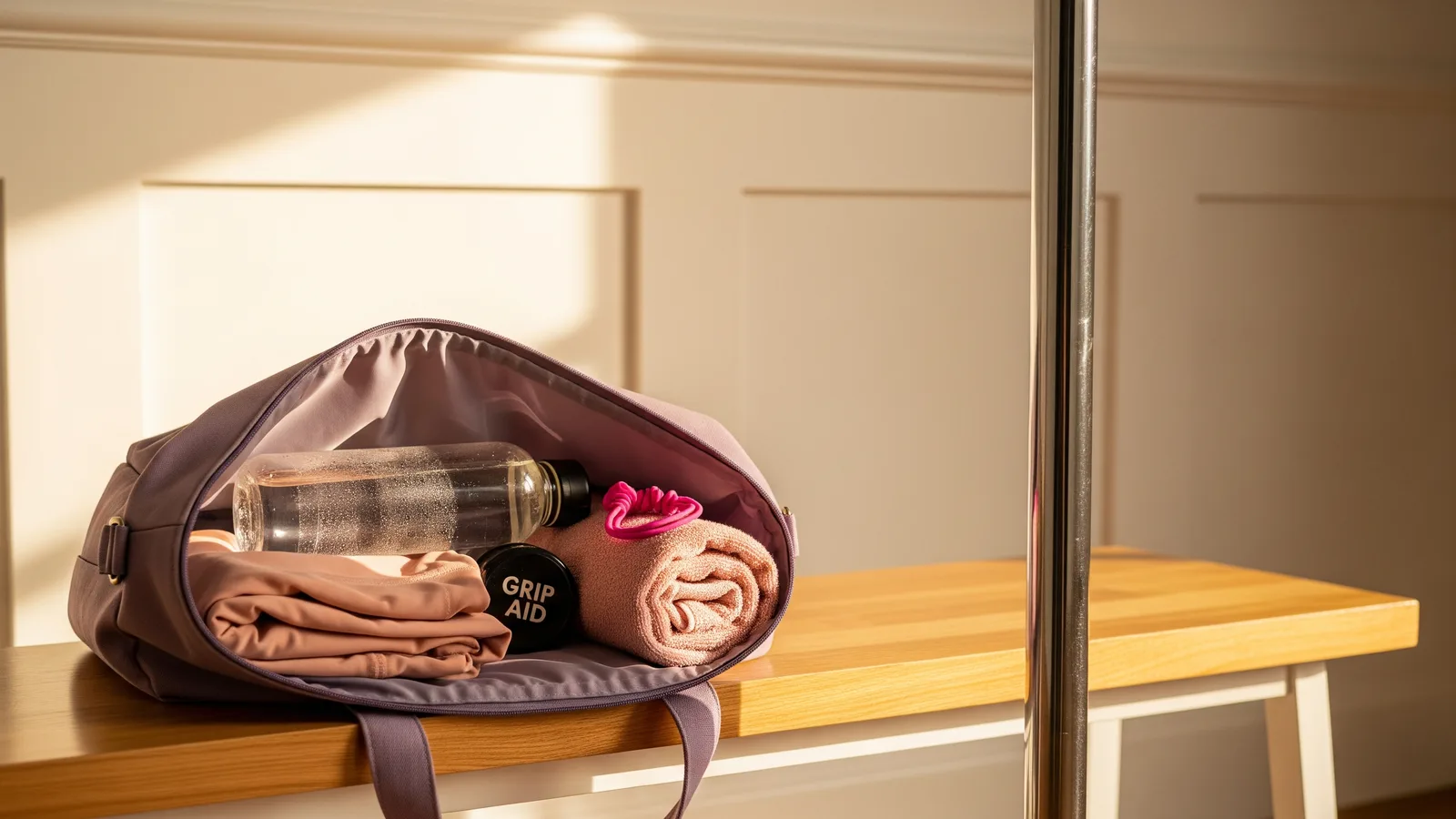
Your first pole class runs about 60 minutes: you arrive early, sign a waiver, warm up as a group, then spend most of the hour taking turns on a shared pole learning two or three simple moves, before a cool-down stretch. It's structured, supervised and slower than you expect. Here's the whole thing, start to finish.
The point of this walkthrough is the logistics — the small practical unknowns that make people anxious before a first session. If you'd rather read one first-timer's honest account of how it actually feels in the room, we've got that too. This piece is the map; that one is the feeling.
What should you do before you arrive?
Before your first pole class, book onto a genuine beginner or taster slot, skip moisturiser and body lotion that day, and eat something light an hour or two before rather than right beforehand. Grip is the currency of pole, and a film of lotion on your skin is the fastest way to lose it. A big meal plus spinning is its own kind of regret.
Pack the night before so you're not scrambling. A basic first-class kit is short and cheap:
- Shorts and a t-shirt or vest — you need bare skin on your legs and arms
- A water bottle and a small towel for sweaty hands
- Socks or trainers for the warm-up (poling itself is barefoot)
- A hair tie for long hair
- Nothing else really — studios provide the poles. If you want the full run-through, our complete beginner's guide covers the lot.
If you're not sure what to put on, the short version is bare skin wins. We go into the grip reasoning and the exact do/don't in the what to wear to pole class guide, but shorts and a top will get you through day one comfortably.
What happens when you arrive?
Aim to arrive ten minutes early. You'll typically be shown where to leave your shoes and bag, pointed to the changing area and toilets, and asked to fill in a short waiver or health form. The waiver is standard for any physical class — it confirms you've flagged injuries, pregnancy or medical conditions the instructor should know about, so tell them honestly rather than glossing over a dodgy shoulder.
Most studios ask you to take off rings, watches and bracelets before you touch a pole. Metal on metal scratches the pole and can pinch your fingers on a spin, so leave jewellery in your bag. This is also the moment to mention if you're nervous — instructors hear it every week and it genuinely helps them look after you.
How does the warm-up work?
Class opens with a group warm-up of roughly ten minutes: some cardio to raise your heart rate, then mobility for your wrists, shoulders, spine and hips. Pole loads your grip and shoulders hard, so warm-ups lean heavily on the upper body and wrists — expect arm circles, shoulder rolls and wrist stretches you might not get in a gym class.
This is done as a whole group, following the instructor, so there's no solo spotlight. It's also where the room settles and the nerves start to lift, because everyone's moving together and nobody's watching you specifically. By the end of the warm-up your hands should feel warm and slightly tacky, which is exactly what you want against the chrome.
What is it like sharing a pole?
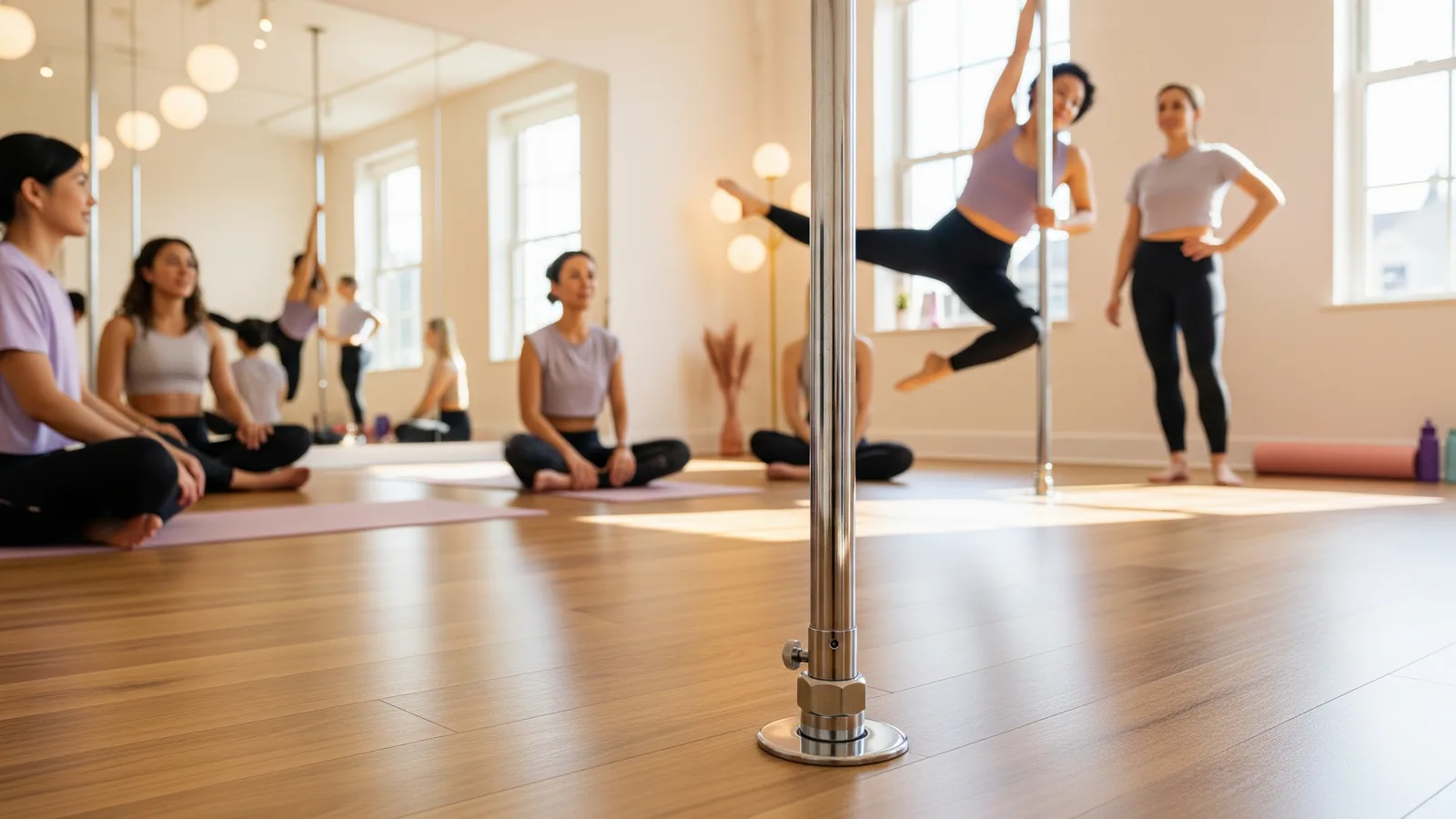
In most beginner classes two or three people share one pole and take turns. While one person practises a move, the others rest, watch and get ready — you're not on the pole for the full hour, and the breaks are genuinely welcome once your hands start to tire. The instructor moves between poles, spotting each attempt and giving individual feedback.
Sharing is less awkward than it sounds, because you're all learning the same thing at the same messy stage. People cheer each other's first spins. If you're worried about being watched, remember everyone else is far too focused on their own sweaty grip to judge yours. Taking turns is also how you learn — watching someone else attempt a move teaches your body the shape before your go.
Which moves will you actually try?
A first pole class usually covers a walk around the pole, one or two basic spins such as the fireman, and a simple hold like a pole sit or a step-up. Nobody strings a routine together on day one. The real work of a first class is learning to grip the pole confidently and trust it to hold your weight, which is a skill in itself.
Here's the rough order most instructors follow:
- A pole walk — circling the pole with good posture to get used to holding on
- A basic spin, most often the fireman, where you swing around and lower to the floor
- A pole sit or a simple pose to introduce gripping with your legs
- Linking a walk into a spin, if the group is ready, for a taste of flow
You won't go upside down. Inverting comes weeks or months later, once your body is ready, and a good instructor won't rush you there. If you want to see the moves named and demonstrated, our first ten pole moves guide walks through the ones you'll meet early.
How does the class end?
The last five to ten minutes are a cool-down: gentle stretches for the muscles you've just worked, especially shoulders, forearms and the sides of your body. Don't skip it, even if you're keen to grab your phone — this is where a lot of next-day soreness gets headed off, and it's the calmest part of the hour.
You'll probably notice red marks on your inner arms or thighs where you gripped the pole. Those tender spots, affectionately called pole kisses, are normal and fade as your skin toughens up over a few weeks. They are not a sign you did anything wrong.
What should you do after your first class?
After your first pole class, drink water, eat properly, and let your body rest — you don't need to practise anything at home that week. Expect to feel muscles you forgot you had, particularly across your back and forearms, a day or two later. That delayed soreness is normal and eases with each class as your body adapts.
If you enjoyed it, book your next session while the buzz is fresh, since beginner blocks build week on week and consistency matters more than intensity. When you're ready to find a regular studio, you can compare class types, levels and prices across the UK studio directory — or jump straight to pole classes in London if that's your city. For the bigger picture, the complete beginner's guide to pole ties it all together.
Common questions
- How early should I arrive for my first pole class?
- Arrive about ten minutes early. That gives you time to leave your shoes and bag, fill in the waiver, remove jewellery and meet the instructor before the warm-up starts. Turning up flustered at the last minute makes the first ten minutes harder than they need to be.
- Will I have to perform in front of everyone on the first day?
- No. There's no solo performance in a beginner class. You take turns on a shared pole with one or two others, all learning the same simple moves at the same stage. The instructor spots each attempt individually, and everyone is focused on their own grip rather than watching yours.
- Do I need to bring my own grip aid to a first class?
- Not usually. Most studios keep grip aid on hand and will offer it if your hands are sweating. Turn up with clean, lotion-free skin and a small towel, and let the instructor decide whether you need any grip aid on the day rather than buying some in advance.
- How sore will I be after my first pole class?
- Expect mild to moderate soreness a day or two later, mostly in your shoulders, back and forearms, plus a few tender grip marks. It's the ordinary delayed soreness of using new muscles and it eases with each class. A proper cool-down stretch and a rest day help a lot.
Keep reading
See all posts →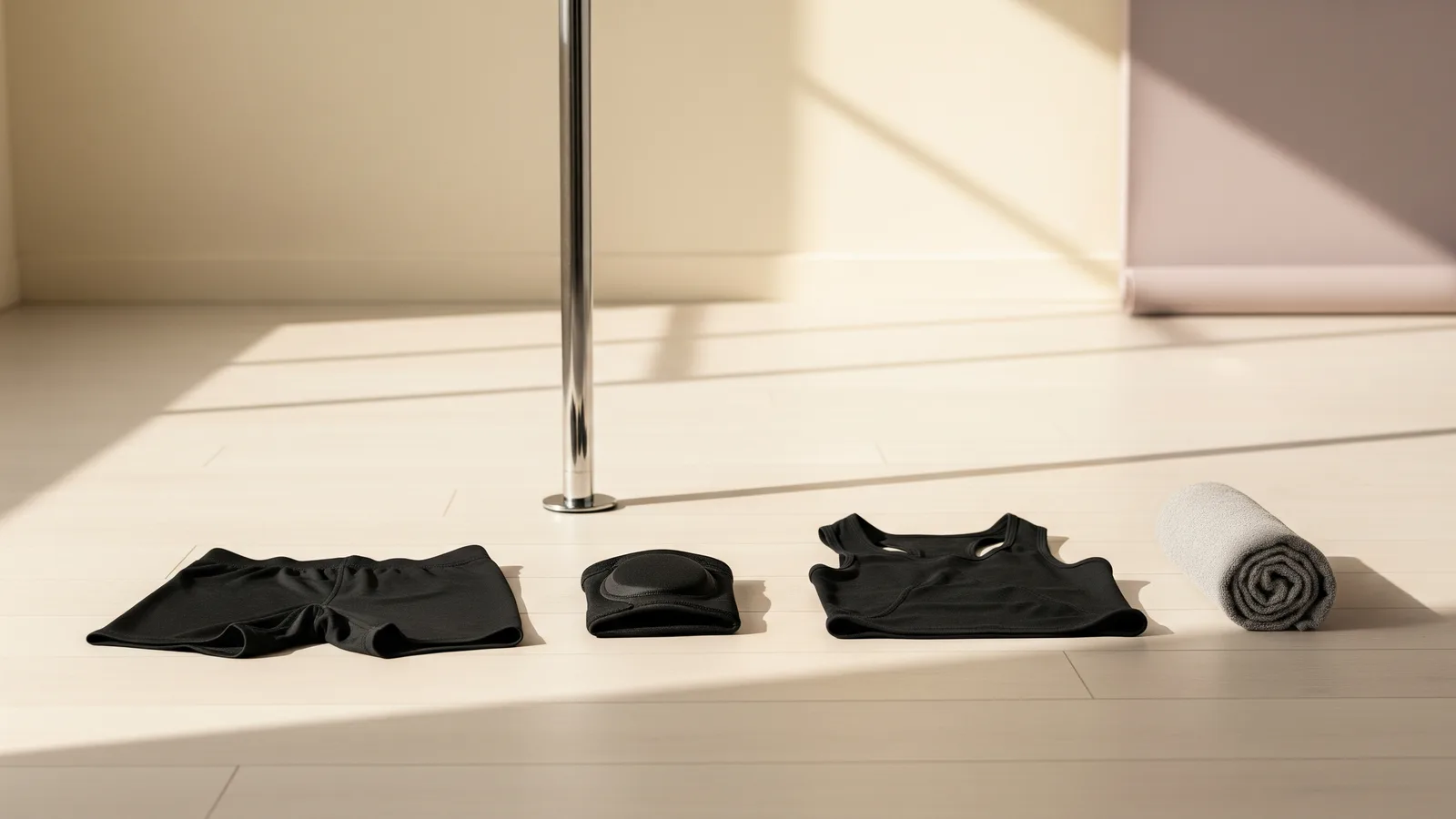
Getting Started
What to Wear to Pole Dancing Class (And What to Leave at Home)
The grip-first guide to what to wear to pole class: why shorts beat leggings, what to leave at home, coverage for the self-conscious, and seasonal notes.
Getting Started
Can You Teach Yourself Pole Dancing? What Self-Taught Polers Say
Can you teach yourself pole dancing? You can learn the basics at home — but a qualified instructor prevents bad habits and injuries, especially before you invert.
Getting Started
Static vs Spinning Pole: Which Should Beginners Learn First?
Static or spinning pole for beginners? Most people learn static first for control and grip, then add spinning later. Here's how they differ and why the order matters.