Getting Started
Can You Teach Yourself Pole Dancing? What Self-Taught Polers Say
Can you teach yourself pole dancing? You can learn the basics at home — but a qualified instructor prevents bad habits and injuries, especially before you invert.
Pole Club Team5 min read
You can teach yourself the basics of pole dancing at home, and plenty of people learn early spins, holds and simple moves on their own pole. But there's an honest caveat worth taking seriously: a qualified instructor spots the small technique errors that harden into bad habits, and keeps you safe around the moves that can genuinely hurt you — particularly anything that takes you upside down. This is the balanced, safety-first answer.
The self-taught route appeals for good reasons: cost, privacy, and being able to practise whenever you like. None of those are wrong. The goal here isn't to talk you out of a home pole — it's to help you learn safely, know exactly where the line sits between what's fine to teach yourself and what really isn't, and get the most from either path.
What can you safely teach yourself at home?
You can reasonably teach yourself the ground-level fundamentals: pole walks, basic spins, simple pole sits, floorwork, and general conditioning and flexibility. These stay close to the floor, don't invert you, and are hard to get catastrophically wrong. Working through them slowly on a properly installed pole, with good tutorials, is how many home polers build a real foundation.
Conditioning and flexibility are arguably the ideal things to train alone, because they carry very little risk and directly improve everything else. Our at-home conditioning guide builds the grip, core and shoulder strength pole needs, and a good moves dictionary that breaks beginner moves down with clear technique notes lets you follow along at your own pace. Keeping strictly to the floor while you're self-teaching keeps the risk genuinely low.
Why does a qualified instructor matter so much?
A qualified instructor matters because they catch the invisible mistakes — a slightly wrong grip, a shoulder that isn't engaged, a habit that feels fine now but sets you up for injury or a wall you can't climb past later. Bad habits learned alone are genuinely hard to unlearn, and an instructor's real-time correction is something no video can replicate. That feedback loop is most of what you pay for in a class.
Instructors also scale moves to your body and your day, spot you on new skills, and know when you're ready to progress and when you're not. If you've never trained pole and aren't sure how to choose someone good, our guide to finding an instructor who's right for you covers what qualifications and insurance to look for. Even a handful of classes early on can correct habits that would otherwise take months to fix.
“The cheapest way to learn pole is rarely the fastest. Bad habits cost more time than lessons cost money.”
Is it safe to learn to invert on your own?
Learning to invert on your own is where self-teaching stops being sensible. Inverting — going upside down — puts significant load on your shoulders, wrists and neck, and a failed invert can mean a fall onto your head or spine. This is the clear line: floor-level basics can be self-taught with care, but you should learn to invert with a qualified instructor spotting you.
The strength and technique behind a safe invert build gradually, and it's easy to attempt one before your body is ready when there's no one to tell you to wait. Our beginner-to-invert guide maps out the strength milestones, and our injury-prevention guide explains why the shoulder and neck loading here is not something to gamble with alone. If you take one thing from this article, make it this one.
Self-taught versus a studio — the honest trade-offs
Neither path is simply better; they trade cost and convenience against feedback and safety. Many polers do both — classes to learn moves correctly, home practice to drill them between sessions. Here's how the two stack up honestly:
| Teaching yourself at home | Learning at a studio | |
|---|---|---|
| Cost | Pole and mat upfront, then free | Typically £10–£25 per UK class |
| Feedback | None in real time; self-filming helps | Instant correction from a qualified instructor |
| Safety on inverts | Not recommended alone | Spotted and scaled to your readiness |
| Best for | Conditioning, floorwork, basic spins | Learning correctly and progressing safely |
What bad habits do self-taught polers pick up most?
The most common self-taught habits are gripping with the wrong parts of the hand, letting the shoulders disengage during holds, and muscling through moves that should be driven by position rather than force. None of these feel wrong while you're doing them, which is exactly why they're so persistent — the body happily rehearses an inefficient pattern until it's automatic. That's the case an instructor's eye answers.
Rushing is the other big one. Without anyone to say wait, self-taught polers often chase a move their strength isn't ready for, which is how minor strains and stalled progress creep in. Building strength deliberately prevents most of it. Filming yourself, keeping strictly to floor-level work, and progressing slowly are the three habits that keep home practice honest and injury-free.
What kit do I need to practise pole at home safely?
To practise safely at home you need a reputable, correctly installed pole and a crash mat, plus a clear space with nothing to hit. Buy from a known brand like X-Pole or Lupit rather than an unbranded pole, and install it exactly to the manufacturer's instructions — a pressure-mounted pole that isn't tensioned properly is a real hazard. A crash mat under and around the pole is non-negotiable once you're off the floor.
Beyond the pole, keep it simple: shorts and a vest for skin grip, a grip aid like Dry Hands if your hands sweat, and good beginner tutorials to follow. If you're brand new to all of this, our complete UK beginner's guide covers the fundamentals, and when you're ready to add proper instruction you can find a studio near you in our UK pole class directory. Teaching yourself the basics and learning the rest with an instructor is, for most people, the safest and fastest combination.
Common questions
- Can you really learn pole dancing by yourself at home?
- You can teach yourself floor-level basics — pole walks, simple spins, pole sits, floorwork and conditioning — on a properly installed pole. Beyond that, and especially before inverting, a qualified instructor prevents bad habits and injuries. Most polers combine home practice with occasional classes for the best results.
- Is it safe to learn pole moves from online videos?
- Online videos are useful for floor-level basics and conditioning, but they can't correct your grip or posture in real time or spot you. Use them for early spins and strength work, and learn anything that inverts you, or loads your shoulders heavily, with a qualified instructor present.
- Should I learn to invert without an instructor?
- No. Inverting loads your shoulders, wrists and neck heavily, and a failed attempt can cause a fall onto your head or spine. This is the clearest line in pole safety — learn to invert with a qualified instructor spotting you and confirming you're strong enough.
- What do I need to start pole dancing at home?
- A reputable, correctly installed pole from a brand like X-Pole or Lupit, a crash mat, and a clear space. Add shorts and a vest for skin grip, a grip aid if you sweat, and good beginner tutorials. Install strictly to the manufacturer's instructions.
- Is teaching yourself pole cheaper than classes?
- Upfront, a pole and mat cost more than a single class, but home practice is free afterward, whereas UK classes typically run £10–£25 each. The trade-off is feedback and safety — most polers find a mix of home practice and some instruction gives the best value.
Keep reading
See all posts →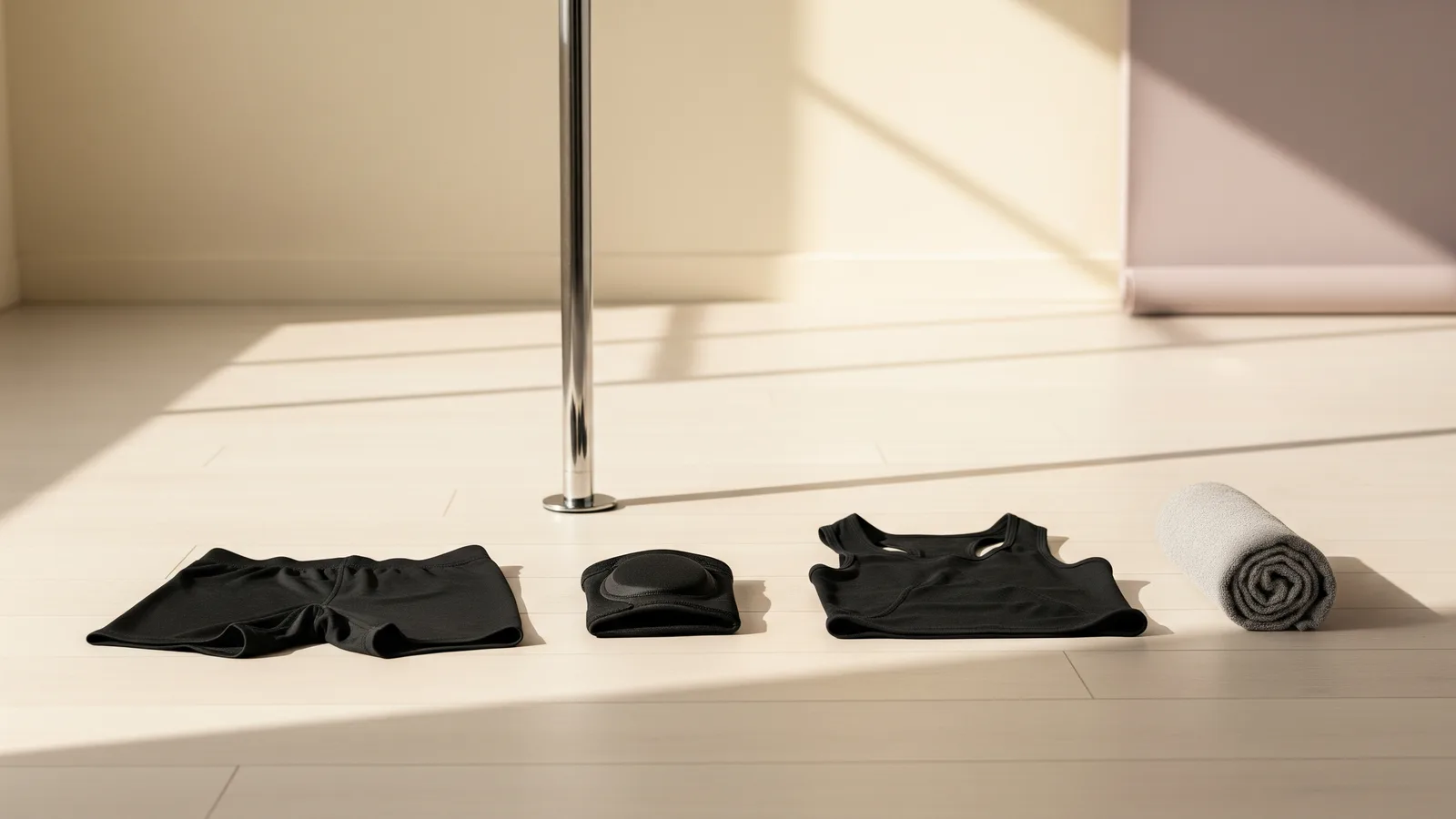
Getting Started
What to Wear to Pole Dancing Class (And What to Leave at Home)
The grip-first guide to what to wear to pole class: why shorts beat leggings, what to leave at home, coverage for the self-conscious, and seasonal notes.
Getting Started
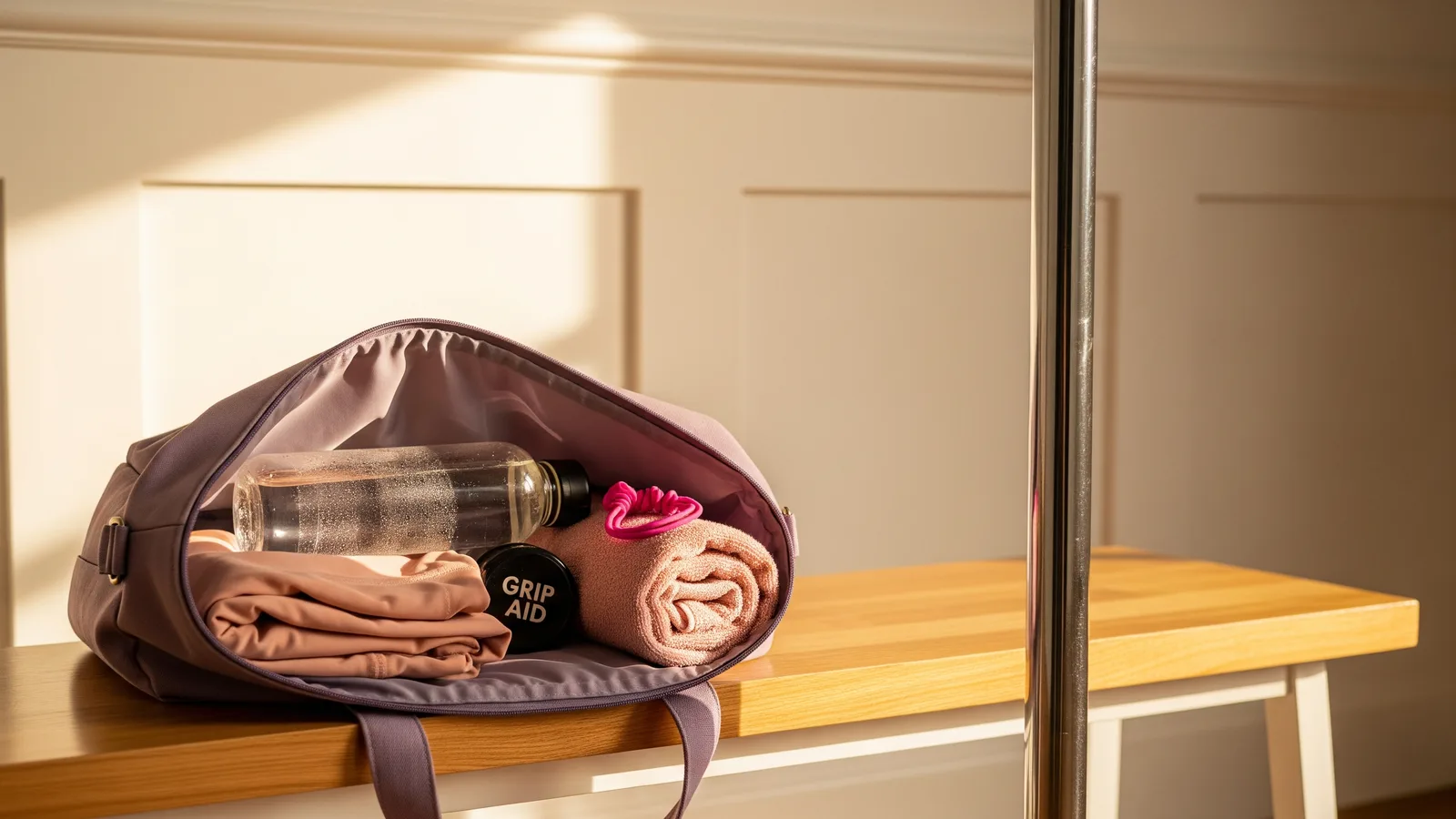
What to Expect at Your First Pole Dancing Class: An Honest Walkthrough
A minute-by-minute logistics guide to your first pole class — arriving, waivers, warm-up, sharing a pole, the moves you'll try, and what to do after.
Getting Started
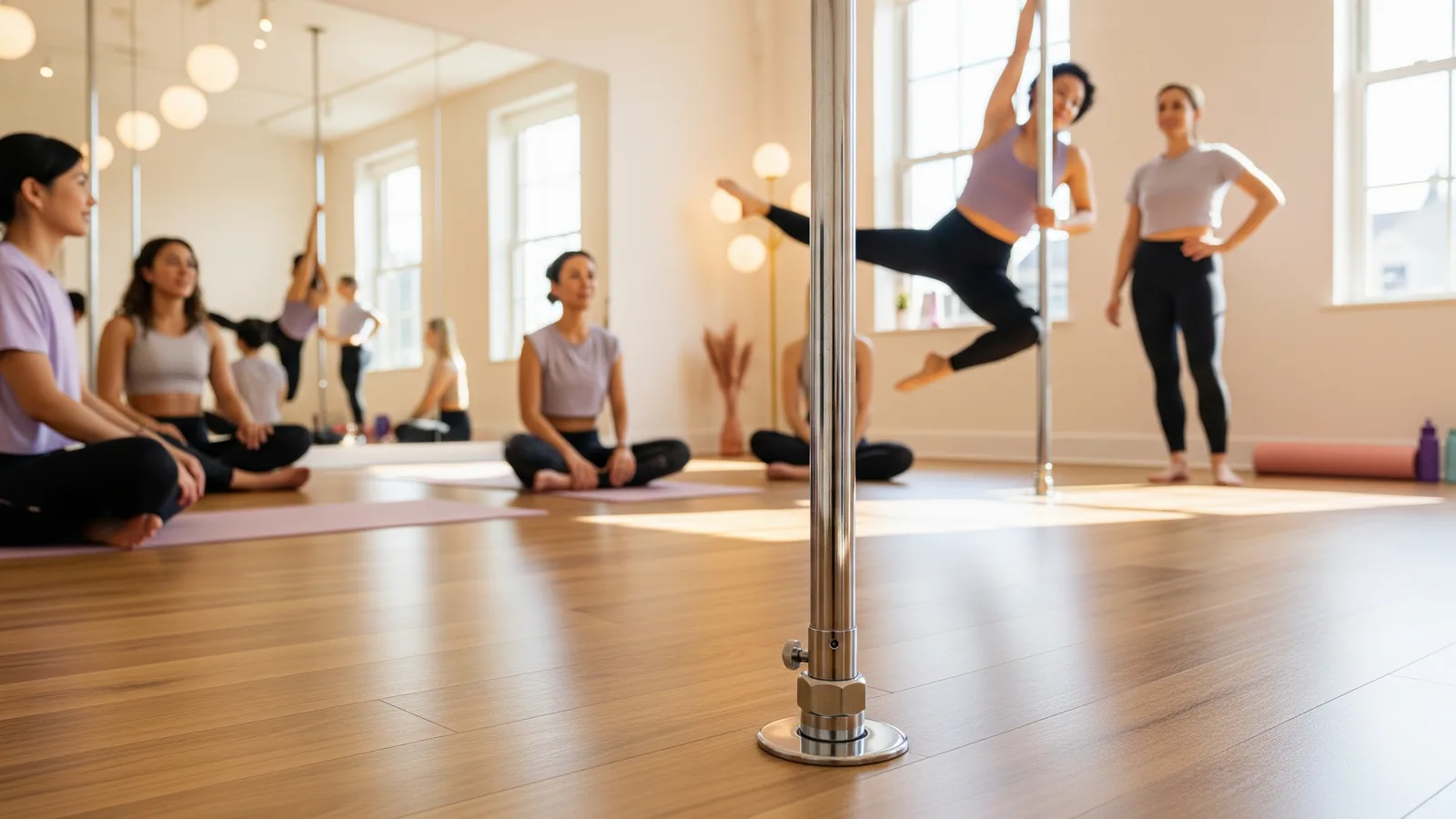
Static vs Spinning Pole: Which Should Beginners Learn First?
Static or spinning pole for beginners? Most people learn static first for control and grip, then add spinning later. Here's how they differ and why the order matters.