Poles & Equipment
Best Dance Poles for Home Use in the UK (2026 Buyer's Guide)
A complete UK buyer's guide to home dance poles: reputable brands, static vs spinning, diameters, finishes, mounting, budget ranges and where to buy safely.
Pole Club Team8 min read
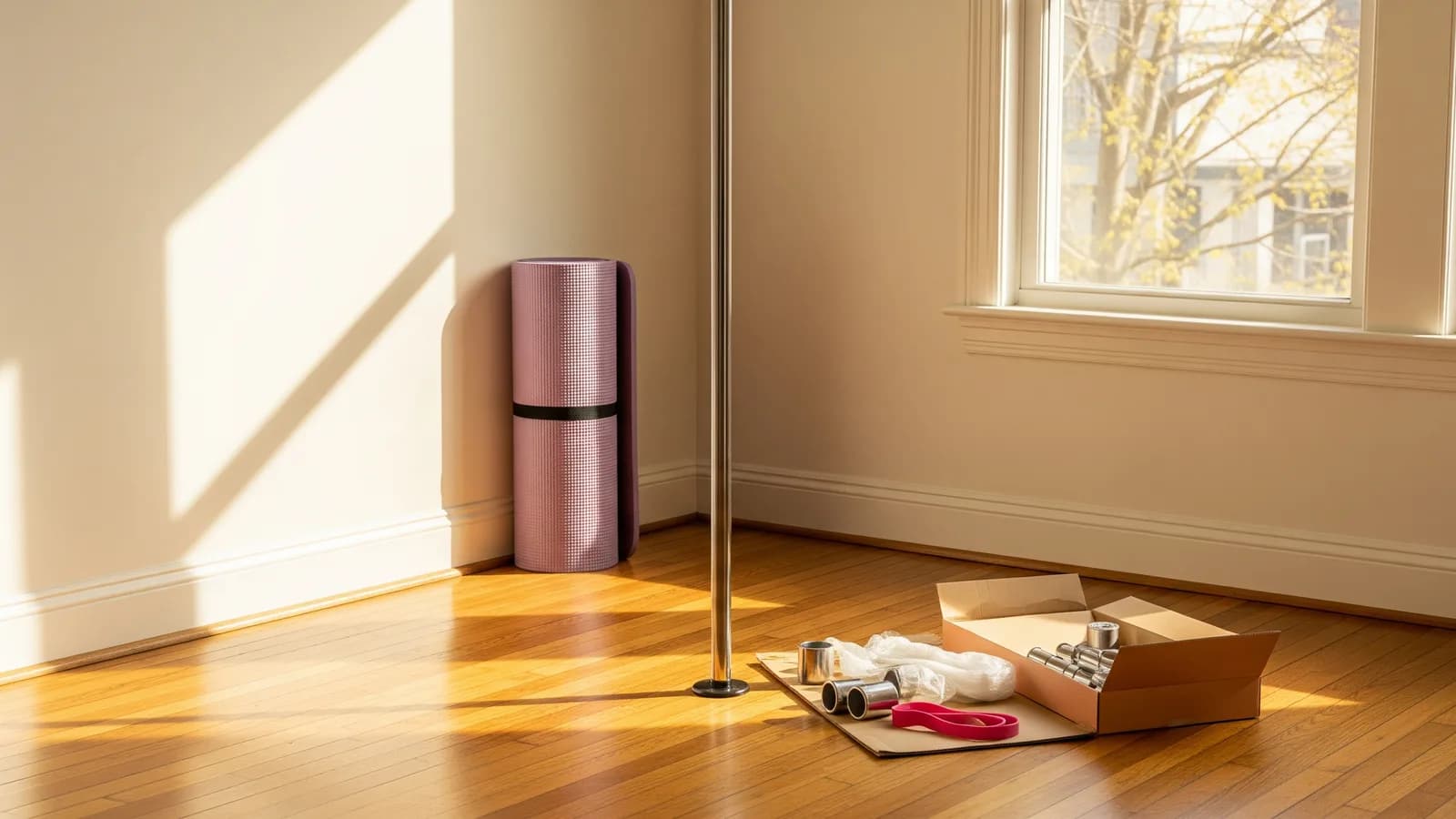
The best dance pole for home use in the UK is a pressure-mounted, static-and-spinning pole from a reputable brand like X-Pole or Lupit, in a 45mm diameter with a chrome or stainless steel finish. That combination suits most polers, most rooms and most budgets, typically £250 to £450 for the pole itself. Everything else in this guide is how to choose the right variant for your body, your ceiling and your goals.
Buying a home pole is a safety decision as much as a shopping one, because you're hanging your bodyweight from your own ceiling. That's why brand, mount type and correct installation matter far more than saving a few pounds. A cheap, unbranded pole with no load rating and no fitting instructions is the one purchase in pole that's genuinely worth avoiding, and it's the one people most often get wrong.
Which pole brands are worth buying in the UK?
The two brands most trusted by UK polers are X-Pole and Lupit, and either is a safe choice for a home pole. Both are established manufacturers with proper load engineering, clear installation instructions, spare parts and a resale market — which matters because a well-known pole holds its value if you ever sell it. Studios across the UK use them, so what you learn at home transfers directly to class.
X-Pole's home range spans several tiers: the SPORT is a static-only entry pole aimed at newer polers, the XPERT is the popular static-and-spinning workhorse, the XPERT PRO is the top-tier version, and the X-STAGE is a freestanding option that needs no ceiling. Lupit's home range centres on the Classic G2 and the Diamond G2 (the Classic decorated with Swarovski crystals), plus the freestanding Lupit Stage. Both brands sell parts and extensions separately, so a pole grows with your ceiling and your ambitions.
Plenty of cheaper poles exist, and some budget brands are perfectly usable for gentle beginner work. But the further you stray from the established names, the harder it is to verify load ratings, get spare parts, or trust the fittings. For a piece of kit you'll hang upside down from, spending in the trusted-brand range is the sensible floor, not a luxury. Our choosing a home pole guide goes deeper on shortlisting a specific model.
Static or spinning — which should a home pole be?
Buy a pole that does both static and spinning, because nearly all reputable home poles switch between the two and you'll want both eventually. Static pole is locked and doesn't rotate, which is where beginners build grip and technique; spinning pole rotates freely and adds the momentum you'll want later. A dual-mode pole future-proofs your purchase — there's little reason to buy static-only unless budget is tight.
Both X-Pole's XPERT range and Lupit's Classic and Diamond poles are static-and-spinning as standard, switching modes with a mechanism at the base or via loose bearings. X-Pole's SPORT is deliberately static-only as a cheaper, simpler entry point; Lupit's Quick-Lock system on its G2 poles lets you swap between static and spinning quickly. If you're still deciding which mode to learn on first, our guide to static or spinning pole for beginners covers that choice in detail.
What pole diameter should you buy?
Buy a 45mm diameter pole unless you have small hands, in which case consider 40mm (X-Pole) or 42mm (Lupit). 45mm is the industry standard used in studios, gyms and competitions worldwide, so training on it at home means what you practise transfers straight to class. Diameter is about grip comfort, not strength — the wrong size makes moves harder than they need to be.
| Diameter | Best for | Notes |
|---|---|---|
| 40mm | Smaller hands, youth polers | X-Pole's smaller option; easier to grip fully but less common in studios. |
| 42mm | Smaller-to-average hands | Lupit's smaller option; a middle ground some find kinder on the hands. |
| 45mm | Most polers | The industry standard. Match your studio and your training transfers directly. |
| 50mm | Legacy / specific preference | Older standard, now uncommon; generally avoid for a new purchase. |
The practical rule is to match whatever your studio uses, so home practice feels identical to class. Most UK studios run 45mm, so that's the default recommendation. If you have noticeably small hands and struggle to wrap the pole in class, ask what diameter your studio uses and whether a smaller home pole would suit you before you buy.
What finish should a home pole have?
For most UK homes, choose chrome or stainless steel — chrome offers excellent grip at a moderate price, and stainless steel is the nickel-allergy-safe alternative. Finish changes how the pole grips your skin and how much it costs, and the right choice depends on your skin, your hands' sweatiness and any metal allergies. Grip preference is personal, so there's no single best finish for everyone.
The main finishes explained
- Chrome — the default: a steel core with a chrome coating, strong grip, moderate price, suits most polers. Not suitable if you have a nickel allergy.
- Stainless steel — the nickel-safe choice: highly polished, allergy-friendly, grip similar to chrome, usually a little pricier.
- Brass — a warmer, grippier feel favoured by some for humid climates or sweaty hands; softer metal, higher price.
- Titanium gold — chrome that's treated for extra grip (X-Pole); good for those who find chrome slightly slippery.
- Powder coat — a baked-on coloured layer (black, white and others); very grippy, forgiving on the skin, popular for beginners and warmer rooms.
- Silicone — a thick grippy sleeve that lets you pole in leggings with almost no slip; specialist, not for learning skin-grip technique on.
Pressure-mounted or freestanding — how should it fix in?
Choose a pressure-mounted pole if you have a solid ceiling, and a freestanding pole only if you can't or don't want to touch the ceiling. Pressure-mounted poles wedge between floor and ceiling with no drilling, which is why they suit rented and owned homes alike — but they rely on a suitable ceiling to push against. Freestanding poles stand on their own weighted base and need no ceiling, at the cost of size, price and portability.
A pressure-mounted pole is the right answer for the vast majority of home polers. It's cheaper, more compact and, installed correctly against a solid ceiling, completely secure. The critical caveat is that your ceiling must be able to take the upward force — a solid concrete or timber-joisted ceiling is ideal, whereas suspended ceilings, plasterboard with a void above, and loft-room slopes may not be safe. Never fit a pressure-mounted pole to a ceiling you can't verify.
Freestanding poles like the X-STAGE and the Lupit Stage sit on a broad, weighted base and are the answer for suspended ceilings, very high ceilings, garden studios or performers who need to travel with a pole. They cost considerably more, take up a bigger footprint, and are heavier to move, but they remove the ceiling from the equation entirely. Installation and ceiling-suitability are covered step by step in our home pole installation guide — read it before you buy, not after.
How much should you spend on a home pole?
Budget roughly £250 to £450 for a good pressure-mounted static-and-spinning pole from a reputable brand, with freestanding stages running considerably higher. Price tracks brand, finish, tier and mount type, and prices move over time, so treat these as ballpark ranges rather than fixed figures. The pole is the one place in pole where spending in the reputable range genuinely buys safety, not just polish.
| Budget band | What it typically gets you |
|---|---|
| Under ~£150 | Unbranded / budget poles. Usable for gentle beginner work at best; verify load rating and fittings carefully, or avoid. |
| ~£250–£350 | A reputable-brand static-and-spinning pole, chrome, 45mm, pressure-mounted. The sweet spot for most home polers. |
| ~£350–£450 | Top-tier models, premium finishes (stainless, brass, titanium), or added extensions for high ceilings. |
| ~£600+ | Freestanding stages (X-STAGE, Lupit Stage) that need no ceiling — for suspended ceilings, performers or garden studios. |
Factor in the extras when you budget. A crash mat is strongly recommended once you start inverting, ceiling extensions cost more for tall rooms, and grip aid is an ongoing small cost. Don't skimp on the mat to afford a fancier finish — a crash mat is a safety item, not an accessory. Our grip aid buying guide covers the consumables side.
Where should you buy a home pole in the UK?
Buy from the brand's official UK site or an authorised retailer, not a random marketplace listing. Official channels guarantee you're getting a genuine pole with the correct fittings, a real load rating and access to spare parts — none of which you can rely on from unbranded third-party sellers. Counterfeit and grey-market poles are a real problem, and a fake fitting is exactly the part you don't want failing mid-invert.
Second-hand poles from reputable brands can be excellent value, because they hold up well and hold their price. If you buy used, confirm it's a genuine brand pole, that all parts and fittings are present and undamaged, and ideally that you can identify the model to source spares later. A missing or worn part on a load-bearing pole isn't a bargain — it's a hazard.
How do you stay safe with a home pole?
Stay safe by installing the pole exactly to the manufacturer's instructions, verifying your ceiling can take the load, using a crash mat once you invert, and never attempting new moves at home that you haven't been taught in class. A home pole has no instructor to spot you, so the discipline of only practising what you've been shown is your main safety net. Home is for consolidating class skills, not learning risky new ones solo.
“A home pole is brilliant for practising what you already know. It is a poor and dangerous place to teach yourself an invert for the first time.”
Check your pole regularly — retighten it as the instructions specify, watch for any movement or spinning of the base, and inspect fittings for wear. Learn on the pole before you buy one, too: a home pole makes far more sense a few weeks into classes, once you know pole suits you and you understand what safe practice feels like. If you're not yet in a studio, our beginner's guide to pole and the UK studio directory are the right first stop before any pole purchase.
Common questions
- What is the best dance pole for home use in the UK?
- For most people, a pressure-mounted, static-and-spinning pole from X-Pole or Lupit in 45mm chrome or stainless steel, budgeting roughly £250 to £450. It suits most rooms and bodies, matches studio poles, and comes with proper load ratings and spare parts. Choose a smaller diameter only if you have small hands.
- Do I need a spinning pole or is static enough for home?
- Buy a pole that does both. Nearly all reputable home poles switch between static and spinning, and you'll want both as you progress — static for building grip and technique, spinning for momentum-based moves. Static-only poles like X-Pole's SPORT are cheaper entry points, but dual-mode future-proofs your purchase.
- Can I fit a pressure-mounted pole in a rented flat?
- Usually yes, because pressure-mounted poles wedge between floor and ceiling with no drilling. The critical requirement is a solid, suitable ceiling to push against — concrete or timber-joisted is ideal. Suspended ceilings, plasterboard with a void, and loft slopes may not be safe. Verify your ceiling before buying, or choose a freestanding pole.
- How much should a good home pole cost?
- Budget roughly £250 to £450 for a reputable-brand, static-and-spinning, pressure-mounted pole; freestanding stages run considerably higher, often £600 plus. Prices vary by finish, tier and retailer. Poles under about £150 are usually unbranded with unverifiable load ratings — for a piece of kit you hang from, that's a false economy.
- Is chrome or stainless steel better for a home pole?
- Both grip well. Chrome is the cost-effective default that matches most studios; stainless steel is the nickel-allergy-safe alternative at a slightly higher price. If your hands sweat a lot, powder coat or brass grip even better. Match your studio's finish where you can, so home practice feels identical to class.
- Should I buy a home pole as a complete beginner?
- It's better to take a few classes first. A home pole makes most sense once you know pole suits you and understand what safe practice feels like, since there's no instructor to spot you at home. Learn the basics in a studio, then buy a pole to practise what you've already been taught.
Keep reading
See all posts →
Poles & Equipment
X-Pole vs Lupit Pole: Which Home Pole Should You Buy?
X-Pole vs Lupit: a fair head-to-head on ranges, mode-switching, diameters, finishes and freestanding options to help UK polers choose the right home pole.
Classes & Costs
Pole Class Etiquette: The Unwritten Rules Every Studio Wishes You Knew
The unwritten rules of pole class etiquette — wiping the pole down, sharing fairly, phones, hygiene and why you should never teach the person next to you. Fit in from class one.
Classes & Costs
How to Practise Pole on a Budget
Practical ways to do pole dancing on a budget — blocks over drop-ins, taster deals, minimal kit, off-pole practice at home and buying second-hand without cutting safety corners.