Classes & Costs
Pole Class Etiquette: The Unwritten Rules Every Studio Wishes You Knew
The unwritten rules of pole class etiquette — wiping the pole down, sharing fairly, phones, hygiene and why you should never teach the person next to you. Fit in from class one.
Pole Club Team5 min read
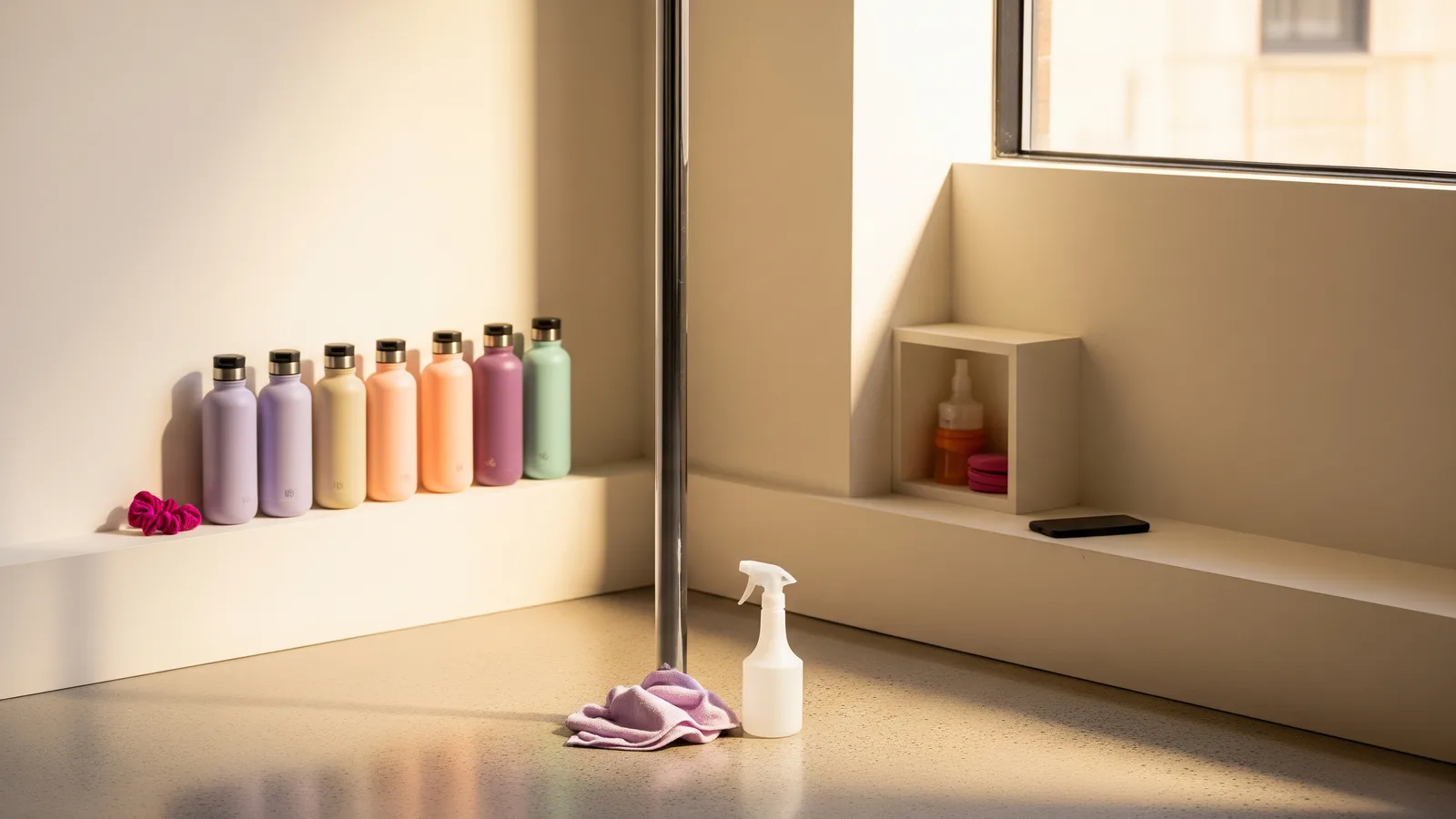
The core rules of pole class etiquette are simple: wipe the pole down after your turn, share it fairly, keep your phone away unless the instructor says otherwise, don't teach the people around you, arrive on time and come clean and lotion-free. Follow those and you'll fit into any UK studio from your very first class.
None of this is written on the wall, which is exactly why new polers worry about it. The good news is that studio etiquette is mostly common courtesy plus a few pole-specific quirks around grip and shared equipment. Learn the handful of quirks and the rest is instinct. Here's everything a studio wishes you knew before you walked in.
Why do you have to wipe the pole down?
You wipe the pole down after your turn because grip is shared, and your sweat, skin oils and grip aid transfer to the metal and ruin the next person's hold. A quick wipe with the studio's cloth and spray between turns keeps the pole grippy and hygienic for everyone. It's the single most important habit in the room.
Most studios keep a spray bottle and a cloth or blue roll at each pole for exactly this. Wipe from top to bottom after you've been on, especially before you swap with someone else. It takes five seconds and it's the difference between a pole that grips and a slick, greasy one that makes the next person slide — nobody wants to follow the person who didn't wipe.
What are the unwritten rules of a pole class?
Beyond wiping down, a handful of unwritten rules keep a pole class running smoothly and safely. They're the things regulars do without thinking that beginners often don't realise until someone mentions it. Here they are in one place.
- Wipe the pole down after every turn — top to bottom, before you swap.
- Share fairly — take your go and step off promptly so others get equal pole time, especially when two share a pole.
- Keep your phone away — no scrolling mid-class, and never film without checking, because other people are in the room and may not want to be recorded.
- Don't teach the person next to you — even with good intentions, only the instructor should be correcting technique, for safety and to avoid confusion.
- Arrive on time — pole warm-ups prevent injury, and walking in late means you miss the bit that keeps you safe.
- Come clean and lotion-free — no moisturiser, oil or fake tan on class day, as they transfer to the pole and kill grip for everyone.
- Ask before using someone's grip aid or space, and put shared kit back where you found it.
- Tell the instructor about injuries, pregnancy or anything that affects what you can safely do.
If you want the wider picture of what a first session actually looks like — not just the etiquette but the flow of the class itself — our guide to what to expect in your first pole class walks you through it minute by minute.
Why shouldn't you teach other students?
You shouldn't teach other students because pole moves carry real injury risk, and only the instructor knows each person's level, history and the correct progression. Well-meant tips from a fellow student can push someone into a move they're not conditioned for, or contradict what the instructor is building towards. Cheer people on, absolutely — but leave the coaching to the coach.
This matters most around inverts and tricks, where a small error in technique or timing can mean a fall. If a classmate is struggling, the kind thing is to flag it to the instructor, not to demonstrate yourself. Your encouragement is welcome; your unsolicited spotting is not. It's one of the clearest lines in studio etiquette.
How does phone and photo etiquette work?
Phone etiquette in pole is mostly about the other people in the room: keep your phone away during teaching, and never film or photograph without checking who's in shot. Many polers are happy to film their own progress at the end of class, but the room is often full of people who'd rather not appear on anyone's camera, so consent comes first.
If you want a clip of your own progress, ask the instructor when it's appropriate — usually at the end, pointed only at yourself — and angle the shot so you're not catching classmates. Scrolling through your phone between turns also slows the class and eats into everyone's pole time, so save it for after. When in doubt, phone in the cubby.
What about hygiene and being on time?
Hygiene and punctuality are the quiet foundations of good pole etiquette, because pole is close-contact with shared metal and your classmates. Come to class clean, wear a fresh top, tie long hair back, and skip the moisturiser, oil and fake tan on training day — they transfer to the pole and wreck grip for whoever's next. Deodorant yes; anything greasy on your skin, no.
Arriving on time is about safety as much as courtesy. Pole warm-ups prepare your shoulders, wrists and core for the load ahead, so walking in halfway through means skipping the part that protects you from injury. Aim to arrive five or ten minutes early, get changed, and be ready when the instructor starts. If you're running late, a quick message to the studio is the polite move, and some studios won't let you join a class past a certain point for safety reasons.
What if I'm nervous about getting it wrong?
If you're anxious about breaking an unspoken rule, relax — instructors expect beginners not to know the etiquette, and they'll gently guide you. Every regular was new once, and pole studios tend to be some of the friendliest, most supportive rooms in fitness. Watch what others do, ask if you're unsure, and you'll pick it up within a class or two.
Nerves about the whole first class — etiquette included — are completely normal, and there's plenty you can do to settle them beforehand. Our piece on feeling nervous before your first pole class and the broader beginner's guide to pole both help you walk in feeling prepared. When you're ready to book, the Pole Club directory lists welcoming beginner-friendly studios near you.
The short version: treat the pole and the people around you with a bit of care, keep your phone in your bag, and let the instructor do the teaching. Do that and you'll be the classmate every studio hopes walks through the door.
Common questions
- Do you have to wipe the pole down after your turn?
- Yes — it's the most important etiquette rule. Your sweat, skin oils and grip aid transfer to the metal and ruin the next person's grip, so wipe top to bottom with the studio's cloth and spray before you swap. Every studio provides cleaning kit at or near the poles.
- Is it rude to use your phone in a pole class?
- Using your phone to scroll during teaching is poor etiquette, and filming without checking who's in shot can make classmates uncomfortable. Keep your phone away during the class, and if you want to film your own progress, ask the instructor and angle it so you're not recording other people.
- Can I help another student with a move?
- No — leave teaching to the instructor. Pole moves carry injury risk, and only the instructor knows each person's level and progression. Well-meant tips can push someone into a move they're not ready for. Cheer classmates on and flag any struggles to the instructor instead of coaching them yourself.
- What should I do if I don't know the studio rules?
- Ask, and watch what regulars do. Instructors expect beginners not to know the etiquette and will gently guide you. Arrive on time, come clean and lotion-free, wipe the pole after your turn and keep your phone away, and you'll fit in comfortably within a class or two.
Keep reading
See all posts →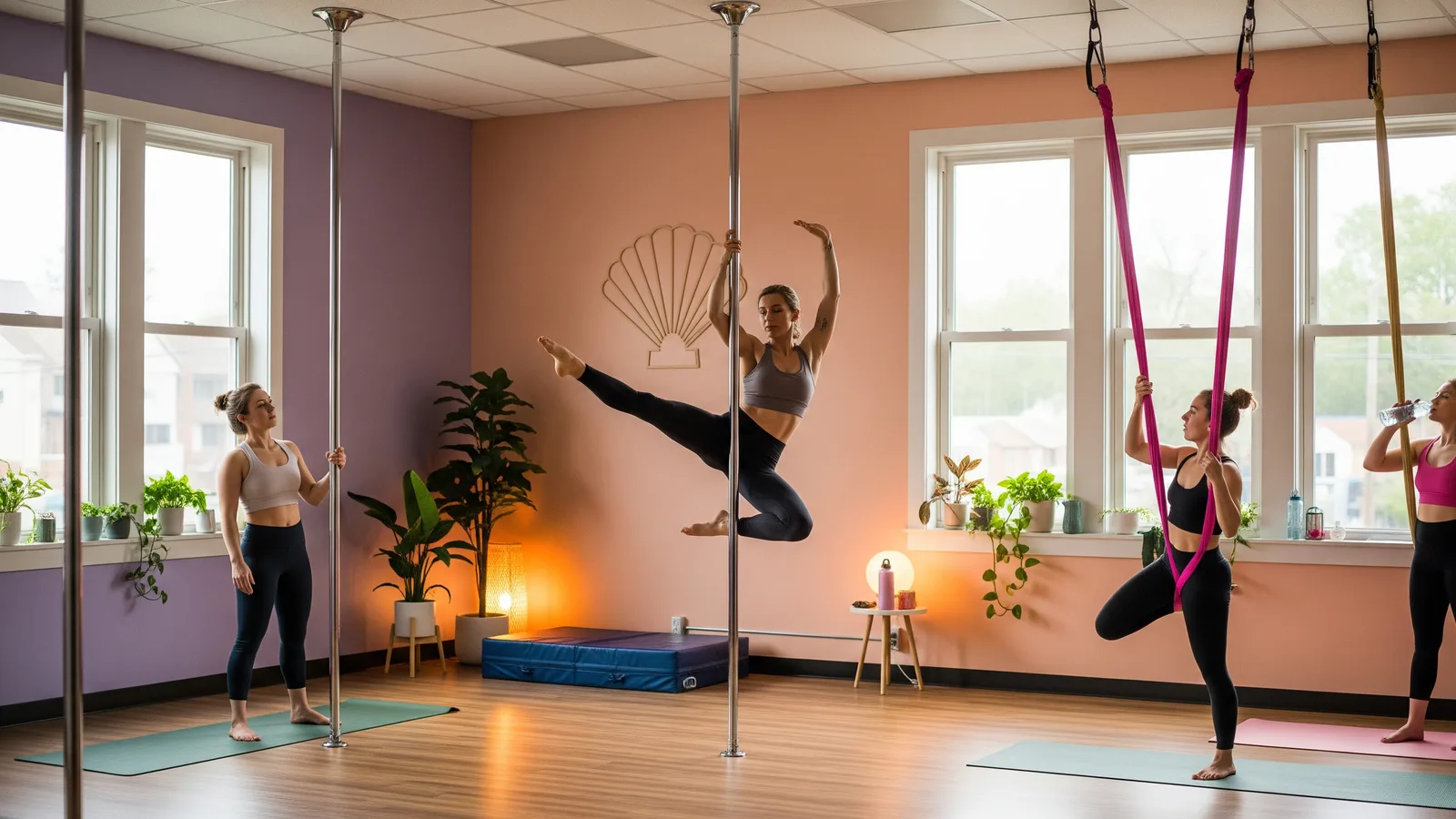
Classes & Costs
How to Practise Pole on a Budget
Practical ways to do pole dancing on a budget — blocks over drop-ins, taster deals, minimal kit, off-pole practice at home and buying second-hand without cutting safety corners.

Classes & Costs
The Real Cost of Starting Pole: A First-Year Budget Breakdown
What pole really costs in year one — classes, kit, grip aids and an optional home pole — broken down into casual, committed and keen budgets so you know what you're signing up for.
Classes & Costs
Are Pole Class Memberships Worth It? Drop-Ins vs Blocks vs Unlimited
The real maths of drop-ins vs blocks vs unlimited pole memberships — the break-even points, who each model suits, and how to avoid paying for classes you never take.