Getting Started
Your First Month of Pole: What Progress Actually Looks Like
An honest week-by-week look at your pole dancing first month progress — what clicks, what frustrates, the bruises, and the small wins that keep you coming back.
Pole Club Team6 min read
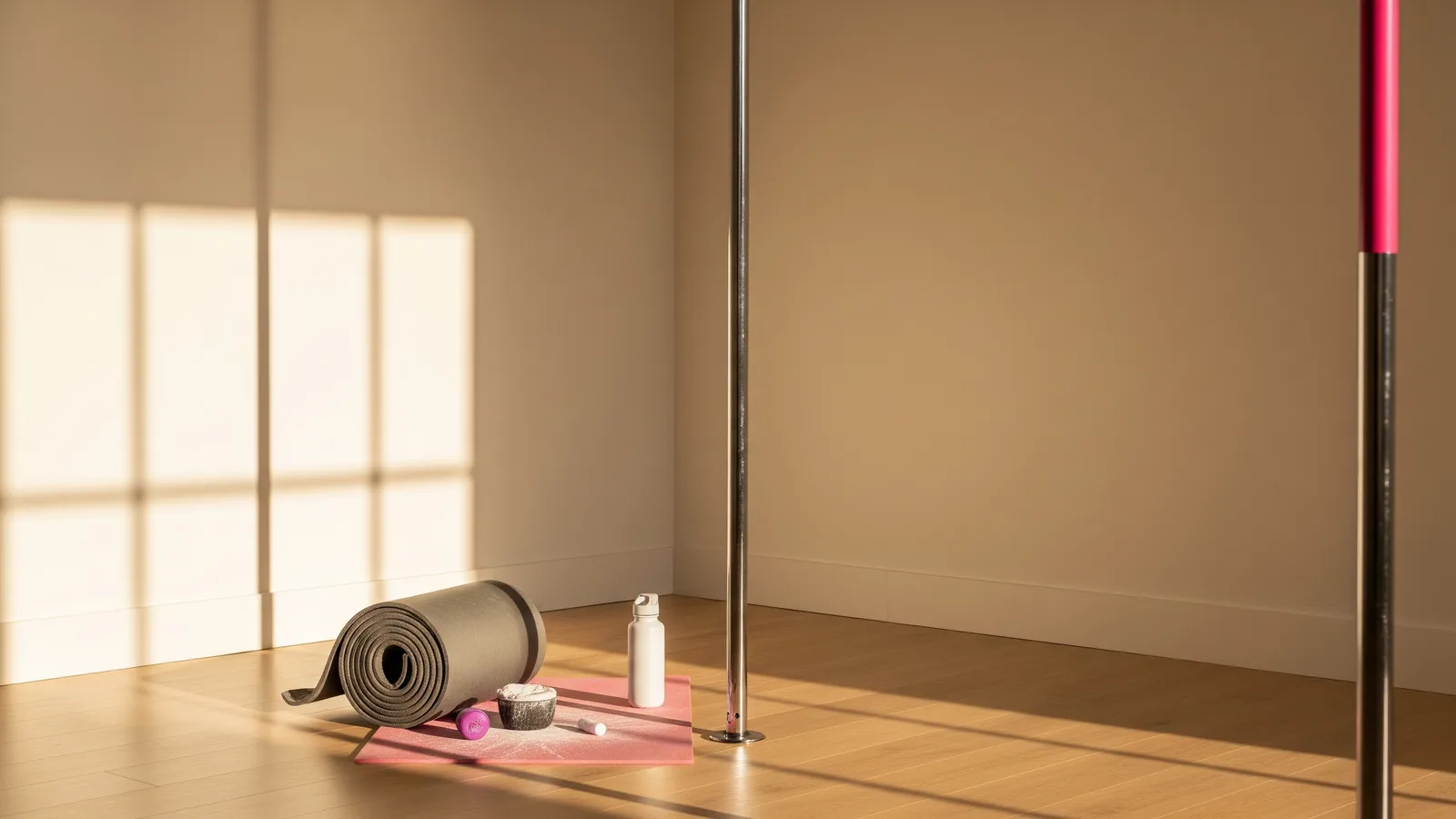
In your first month of pole you'll nail a spin or two, collect a few bruises, and spend at least one class convinced you've forgotten everything from last week. Real progress is jagged, not smooth. By week four most people can spin, sit and link a couple of moves — while still feeling like a beginner, because you are one, and that's exactly right.
The reason month one throws people is that pole progress doesn't behave like the gym, where more effort reliably equals more results. Skin toughens, grip strength builds, and your nervous system learns to trust the pole — all on their own timeline. Knowing the honest shape of that first month means you won't quit in week two thinking it's not working.
What does pole dancing first month progress actually look like?
Pole dancing first month progress usually means four weekly classes in which you learn to grip, spin, sit and link two or three moves — punctuated by bruises, sweaty hands and the odd move that clicks out of nowhere. Nobody inverts (goes upside down) in month one at a well-run studio, and nobody should feel behind for that. The wins are small and specific, and they stack.
“The bad classes are as important as the good ones. Your skin and grip toughen on the days that felt like a step back.”
Week 1: everything is new and your hands have opinions
Week one is about survival and orientation. You'll learn a walk around the pole, a basic spin like the fireman, and how to grip properly — and your hands will feel clumsy, because gripping chrome is a brand-new skill for them. Expect to feel awkward, expect the pole to feel cold and slippery, and expect to be surprised by how much a simple spin takes out of your shoulders.
The single biggest week-one shock is grip, not strength. Sweaty palms slide, and most beginners assume that means they're doing it wrong when it just means they're human. A studio grip aid sorts most of it, and your hands settle as your skin adapts over the weeks. If you'd like a play-by-play of that very first session, what actually happens in your first pole class covers it minute by minute.
Week 2: the bruises arrive
Week two is bruise week for most people. The tender marks on your inner thighs, forearms and the tops of your feet — pole kisses, affectionately — show up now because your skin is learning to hold the pole and hasn't toughened yet. They look worse than they feel, they fade, and they genuinely do get rarer as the weeks go on.
Week two is also where the second-session slump lives: you turn up expecting to remember week one and your body seems to have deleted it. This is completely normal. Motor learning is spiky, and the move you fumbled today is quietly consolidating for next week. Trust the process and turn up anyway.
Week 3: something finally clicks
Week three is usually where the first real click happens. A spin you'd been muscling through suddenly feels smooth, or a pole sit stops pinching and starts holding — and that little hit of 'oh, I can do this' is what hooks most polers for good. Your grip lasts longer now, and your hands ache less afterwards.
Week three is also a good time to think about consistency rather than intensity. One class a week is plenty this early, and the rest between sessions is when your strength actually builds. If you're itching to do something between classes, gentle conditioning helps far more than trying to force new moves alone — our twelve-week strength progression for new polers builds the right muscles without any kit.
Week 4: you can string moves together
By week four most beginners can link two or three moves into a short sequence, hold a pole sit with some confidence, and spin on both sides without thinking through every step. You still feel like a beginner — and you are one — but you've moved from 'can I even do this' to 'which bit do I want to get better at'. That shift is the real month-one milestone.
Week four is when many people commit to a block booking, because the taster curiosity has become an actual habit. If you want to see what's coming next and put names to the moves you're meeting, our moves dictionary breaks everything down by level with clear technique notes.
What are the small wins to look for in month one?
The small wins in month one are physical, not just move-based, and noticing them keeps you going. They're the quiet signs your body is adapting even on weeks where no new trick lands.
- Your grip lasts a full spin instead of giving out halfway.
- The pole stops feeling cold and alien and starts feeling familiar.
- You stop apologising every time you slip or forget a move.
- A move that felt impossible in week one becomes your warm-up.
- You start recognising the first handful of moves by name.
- You leave a class buzzing rather than braced for embarrassment.
What frustrates most beginners in the first month?
The most common month-one frustrations are grip that gives out, uneven sides, and the feeling of forgetting everything between classes. All three are normal and all three fade with time on the pole rather than effort in any single session. Naming them helps, because a frustration you expected is far easier to sit with than one that ambushes you.
| What frustrates you | Why it happens | What actually helps |
|---|---|---|
| Grip keeps slipping | Skin and sweat glands haven't adapted; hands are new to chrome | A grip aid, dry skin, patience over weeks |
| One side is much weaker | Everyone has a dominant side; pole exposes it fast | Train both sides equally from the start |
| Forgetting last week's moves | Motor learning is spiky, not linear | Turn up consistently; it re-consolidates |
| Bruises everywhere | Skin toughening to hold the pole | They fade and get rarer; don't scrub grip off |
| Feeling behind the class | Comparing your week 2 to someone's month 6 | Everyone started where you are; measure against yourself |
Should you buy a pole or extra classes in month one?
In month one you need neither — a home pole and a second weekly class are both decisions for later, once you know pole is going to stick. Your grip and skin can only take so much this early, and rest between sessions is doing real work. The best thing you can buy in month one is a block booking at a studio you like.
If you haven't settled on a studio yet, browse by town on Pole Club and compare class types, levels and prices side by side — pole classes in Manchester is one popular starting point, and every listed UK town has its own page. Finding an instructor whose teaching clicks with you matters more than any bit of kit, so our guide to finding an instructor who's right for you covers what to look for.
How do you know if month one is going well?
Month one is going well if you're turning up, having fun, and can do something in week four you couldn't in week one — however small. Progress at this stage is measured in habit and confidence far more than in advanced tricks. If you're still nervous but curious, still slipping but laughing about it, you're exactly where you should be.
The bigger arc is longer than a month, and it helps to zoom out. Climbs, inverts and confident sequences tend to arrive over several months rather than weeks, so measure yourself against week one, not against someone else's year. Our complete beginner's guide to pole ties the whole first-steps picture together.
Common questions
- Is it normal to feel like I've made no progress in my first month of pole?
- Completely normal. Pole progress is spiky, not linear, so weeks where you seem to forget everything are part of the pattern. Your grip strength and skin are adapting even when no new move lands. Keep turning up and week four will surprise you.
- Why do I have so many bruises after starting pole?
- Bruises, affectionately called pole kisses, appear because your skin is learning to grip the pole and hasn't toughened yet. They're most common around weeks two and three, look worse than they feel, and become rarer as your skin adapts over the following weeks.
- How many classes a week should a beginner do in month one?
- One class a week is plenty in month one, and it's what most beginner courses are built around. Pole asks a lot of your grip and skin, and the rest between sessions is when your strength actually builds. Add a second class only once you've settled in.
- Will I be able to go upside down in my first month of pole?
- Almost certainly not, and that's by design. A good studio won't rush you into inverting before your shoulders, core and body awareness are ready — usually several months in. Month one is about spins, pole sits and linking a few moves, not going upside down.
Keep reading
See all posts →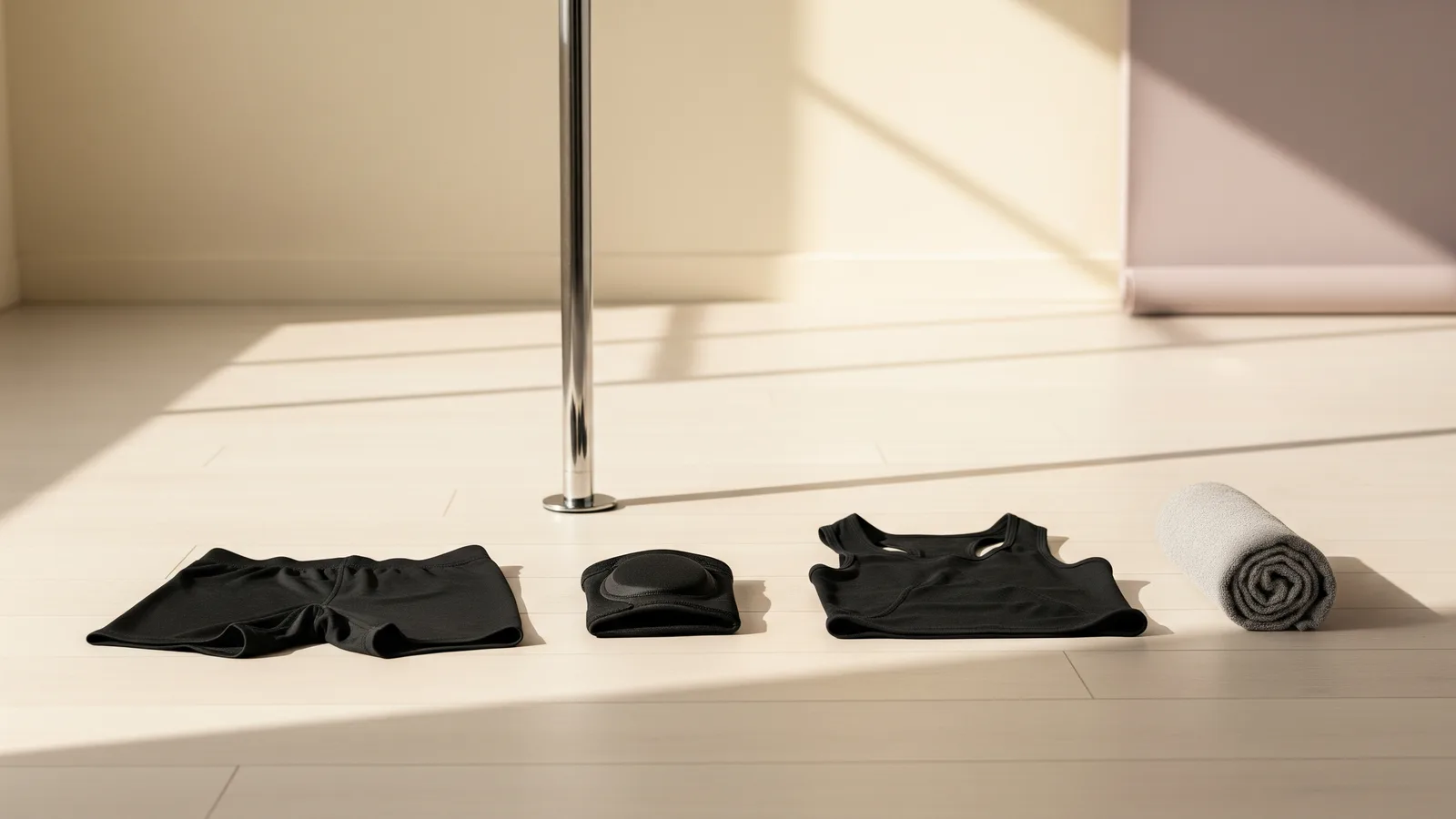
Getting Started
What to Wear to Pole Dancing Class (And What to Leave at Home)
The grip-first guide to what to wear to pole class: why shorts beat leggings, what to leave at home, coverage for the self-conscious, and seasonal notes.
Getting Started
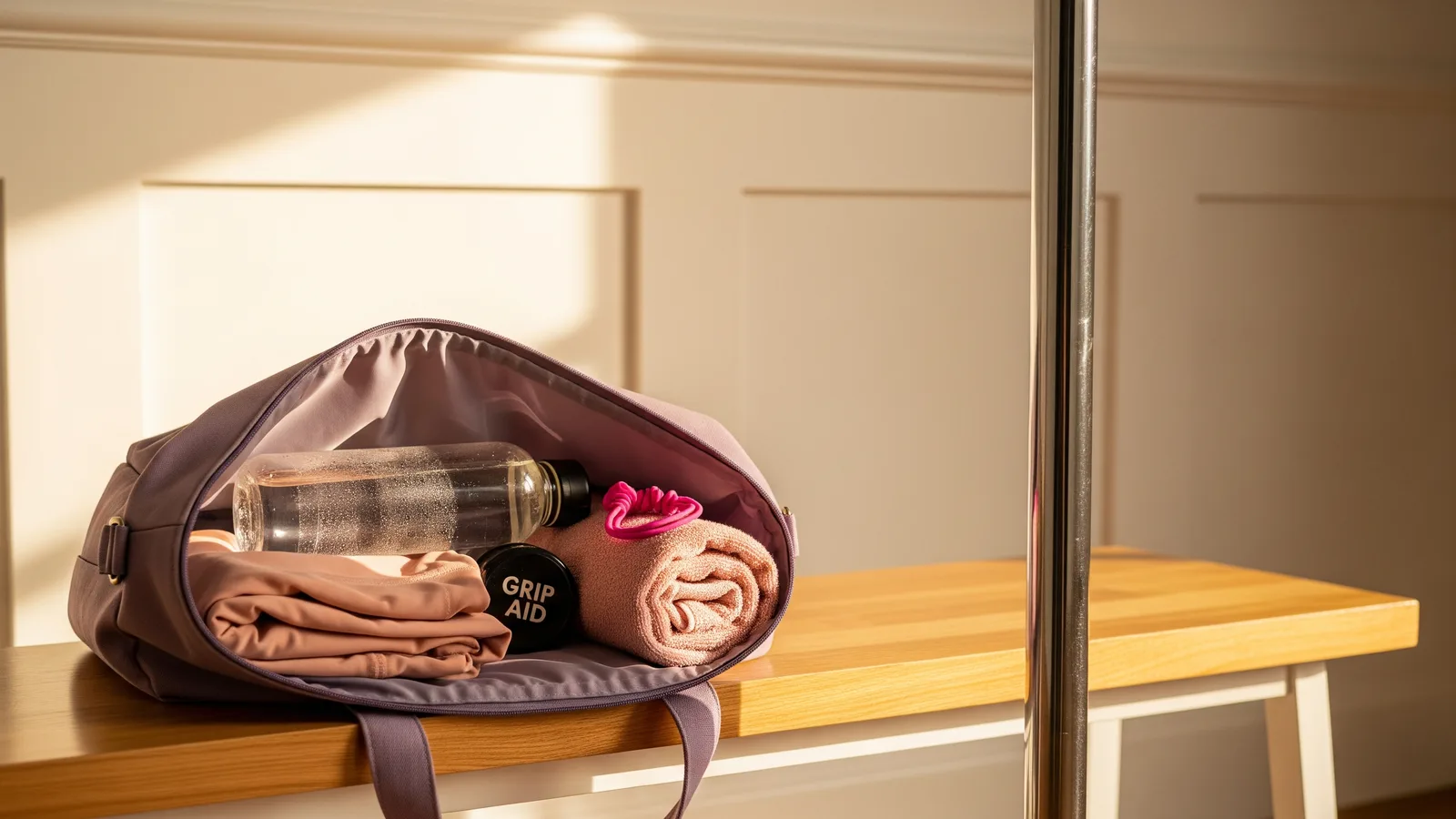
What to Expect at Your First Pole Dancing Class: An Honest Walkthrough
A minute-by-minute logistics guide to your first pole class — arriving, waivers, warm-up, sharing a pole, the moves you'll try, and what to do after.

Getting Started
Can You Teach Yourself Pole Dancing? What Self-Taught Polers Say
Can you teach yourself pole dancing? You can learn the basics at home — but a qualified instructor prevents bad habits and injuries, especially before you invert.