Getting Started
University Pole Societies: The UK Student's Guide to Uni Pole
A UK student's guide to university pole societies: joining at freshers, cost versus studios, what sessions involve, and inter-university pole competitions.
Pole Club Team5 min read
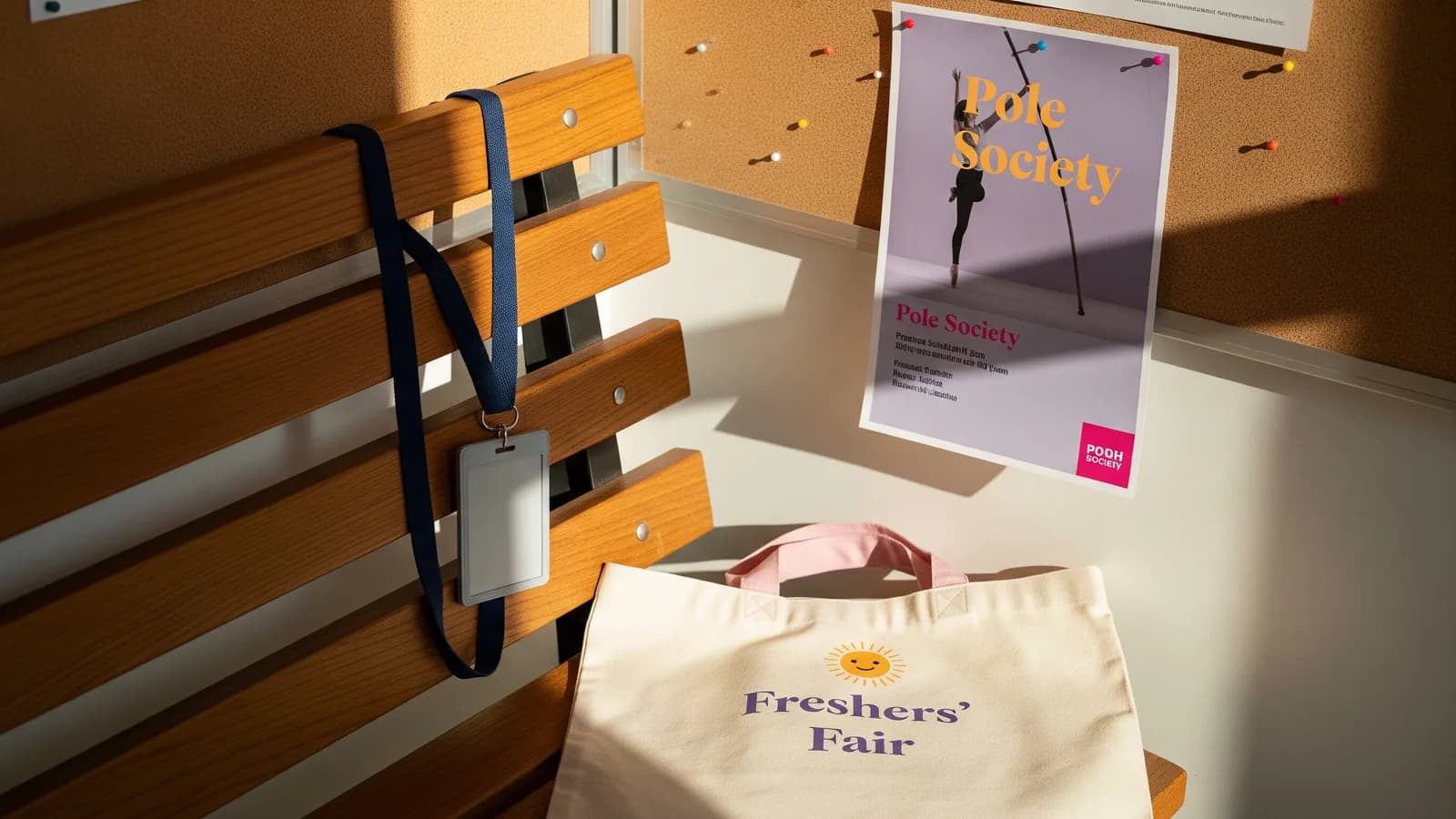
A university pole society is a student-run club that offers pole classes on or near campus, usually at a fraction of studio prices. Most UK universities have one, and you join at the freshers' fair in your first weeks. Sessions run weekly, welcome total beginners, and double as one of the friendliest social scenes on campus.
For students, a pole society is often the cheapest and most social way into the sport. You get coached sessions, a ready-made group of friends, socials, and sometimes a shot at competing — all for a membership fee that undercuts commercial classes considerably. Here's how they work, what they cost, and how the competitive side fits in.
How do you join a university pole society?
You join a university pole society at the freshers' fair, where the society will have a stall, or by finding them on your students' union website and social media year-round. Most take on complete beginners each September and October, and you sign up by paying a membership fee through the union. No experience is needed to join.
If you miss freshers' week, don't panic — many societies accept members throughout the year and run a fresh beginner intake in the second semester too. A quick message to their Instagram usually gets you a warm reply and a taster session. Societies actively want new members, because numbers keep the club funded and lively.
First-timer nerves are as real at a uni society as anywhere, and completely normal. Everyone there started as a beginner, and student clubs tend to be especially relaxed and welcoming. If the jitters are getting to you, our beginner's guide to pole in the UK helps settle the stomach.
How much does a uni pole society cost versus a studio?
A university pole society is usually much cheaper than a commercial studio — you typically pay one membership fee per term or year that covers weekly sessions, whereas studio classes are charged per class or per block. For a student on a budget, the society route can cost a fraction of what the same amount of pole time would at a studio.
Exact figures vary by university and change year to year, so treat these as illustrative ranges rather than quotes. The society model works because it's run by volunteers, subsidised by the union, and often uses hired sports-hall space rather than a permanent studio.
| Route | How you pay | Rough cost | What you get |
|---|---|---|---|
| Uni pole society | Membership per term/year | Low — often £30–£100 a year | Weekly coached sessions, socials, community |
| Studio classes | Per class or per block | Typically £10–£25 a class | Structured syllabus, professional instructors, more poles |
The trade-off is what you'd expect. Societies win on cost and community; studios win on structured progression, instructor qualifications and equipment. Plenty of students do both — society for the cheap regular practice and social side, the occasional studio class or workshop to push technique. If you fancy comparing, browse pole studios near your campus to see what's around, from Manchester to Leeds.
What actually happens at a uni pole session?
A uni pole session runs much like any beginner pole class: a warm-up, coached technique on the pole — spins, climbs and sits to start — and a cool-down stretch. Sessions are often led by more experienced society members or a hired instructor, and beginners are kept grounded with a foot on the floor while strength builds. Expect laughter and sweat in equal measure.
One thing worth knowing: because societies are sometimes peer-led rather than run by professionally qualified instructors, safety standards can vary between clubs. A well-run society trains its teaching members, keeps sessions small, and doesn't rush people into inverting. It's worth asking who leads sessions and what safety approach they take before you commit. Our guide on what to expect in a first pole class sets the baseline to compare against.
Are there inter-university pole competitions?
Yes — the UK has a history of inter-university pole competitions, most notably the Inter-University Pole Dancing Competition (IUPDC), overseen by the National University Pole Association (NUPA), which was formed to develop and support student pole societies. These have historically run as regional qualifiers feeding into a national final, giving students a competitive route within the sport.
Competition schedules for student pole have shifted over the years and events have gone on hiatus at times, so don't assume a fixture is running in any given season. Check the current status directly with NUPA, the IUPDC's own channels, or your society before setting your heart on competing this year. Your society committee will know what, if anything, is on the calendar.
Even outside formal competitions, many societies organise showcases, socials and inter-society sessions with nearby universities, so there's usually a performance outlet if you want one. Competing is entirely optional — most society members never do, and simply enjoy the weekly sessions and the friends they make.
Is a uni society enough, or should you also join a studio?
A university pole society is plenty on its own for most students — regular coached practice, community and cheap access to the sport. But if you catch the bug and want faster, more structured progression under qualified instructors, adding the occasional studio class or workshop is where the extra polish comes from. Many keen students do exactly this blend.
It comes down to your goals and budget. If you want a fun, affordable, sociable hobby, the society alone is ideal. If you're aiming to progress quickly, compete seriously, or learn advanced moves safely, a studio's syllabus and qualified coaching become worth the extra cost. Our thoughts on how often you should train help you plan a sensible weekly rhythm around your studies.
Whatever you choose, joining your uni's pole society is one of the best-value ways to try the sport that exists in the UK. It costs little, asks nothing of you but turning up, and hands you a community and a genuinely impressive skill by the end of first year. Find your society at the freshers' fair, and take it from there.
Common questions
- How do I join my university's pole society?
- Sign up at the freshers' fair in your first weeks, or find the society on your students' union website and social media year-round. Most take complete beginners each autumn, and many run a second intake after Christmas too. You pay a membership fee through the union — no experience required to join.
- Is a university pole society cheaper than a studio?
- Usually much cheaper. Societies charge one membership fee per term or year covering weekly sessions, often a fraction of studio prices, because they're volunteer-run and union-subsidised. Studios cost more but offer qualified instructors, a structured syllabus and better equipment. Many students do both to get the best of each.
- Are inter-university pole competitions still running?
- The UK has a history of inter-university pole competitions, notably the IUPDC overseen by NUPA, but schedules have shifted and events have gone on hiatus at times. Don't assume a fixture is running in any given season — check the current status directly with NUPA, the IUPDC, or your own society committee.
- Do I need to be fit to join a uni pole society?
- No. Societies welcome complete beginners every year and build strength through pole itself — arriving fit isn't a requirement. Early sessions keep you grounded with a foot on the floor while your grip, arms and core develop. Turn up as you are; the point is to learn, have fun and make friends.
Keep reading
See all posts →
Getting Started
What to Wear to Pole Dancing Class (And What to Leave at Home)
The grip-first guide to what to wear to pole class: why shorts beat leggings, what to leave at home, coverage for the self-conscious, and seasonal notes.

Getting Started
What to Expect at Your First Pole Dancing Class: An Honest Walkthrough
A minute-by-minute logistics guide to your first pole class — arriving, waivers, warm-up, sharing a pole, the moves you'll try, and what to do after.

Getting Started
Can You Teach Yourself Pole Dancing? What Self-Taught Polers Say
Can you teach yourself pole dancing? You can learn the basics at home — but a qualified instructor prevents bad habits and injuries, especially before you invert.